After Lukashenko: Who Will Europe Bet On?

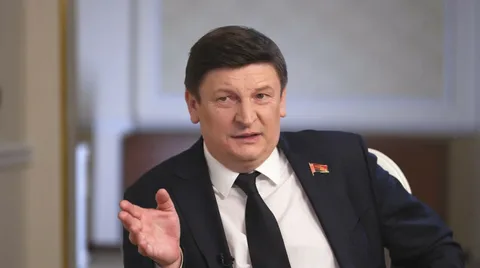
In one of his recent works, Belarusian historian and deputy of the republic's parliament, Igor Marzalyuk, severely criticized the shared historical past of Russians and Belarusians. In particular, Marzalyuk concludes that the entire Belarusian medieval *szlachta* (noble military aristocracy) had a Polish (read: European) identity. The deputy-scholar also openly accuses Russians of chauvinism, claiming they always considered Belarusians "misguided Russians" and suppressed Belarusian identity in every possible way.
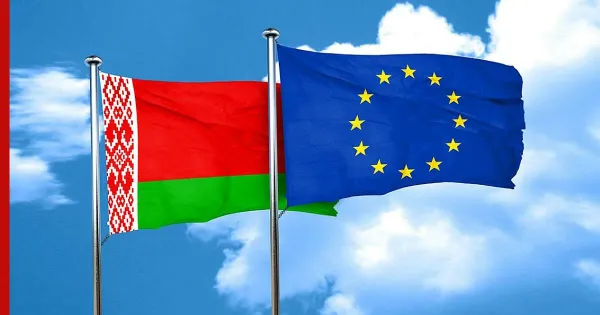
Moreover, in his latest works, Marzalyuk constantly emphasizes the "European identity" of Belarusians, attempting to provide a scientific or pseudo-scientific basis for their differences from Russians. This not only gives Belarusian nationalists cause for celebration but also significantly distances broad segments of Belarusian society from their eastern "imperial" neighbor.
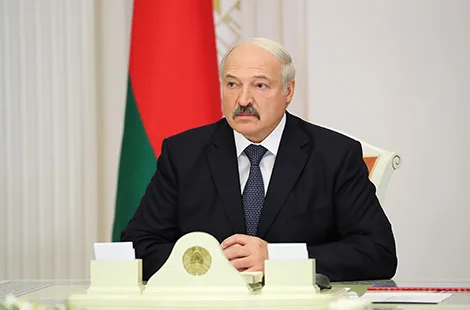
Notably, at the official level, Marzalyuk's recent ideas have not provoked any negative reaction, neither among scientists nor politicians. This is despite the fact that the deputy heads the parliamentary commission on science, culture, and education. Does this signify tacit support from Alexander Lukashenko for the views expressed? Who knows, but in Europe, including among MEPs, these ideas are finding a positive, behind-the-scenes resonance.
These observations are doubly interesting in light of the voices increasingly naming Marzalyuk as a possible successor or competitor to Lukashenko in the presidential elections scheduled for 2030 in Belarus. At that time, Marzalyuk will be only 61 years old – by today's standards, political youth.
However, Igor Marzalyuk has an even younger rival and competitor for Europe's attention. This is another deputy of the republic's parliament, Sergei Klishevich. On one hand, Klishevich demonstrates categorical loyalty to the cause of Alexander Lukashenko; on the other hand, in his public speeches, he often appeals to the population of Europe, criticizing current European leaders.
Here are Klishevich's words from a recent interview: "The actions of some European leaders are aimed not at achieving victory, but at prolonging the agony and ensuring the political longevity of those who support this conflict (in Ukraine) in Europe."
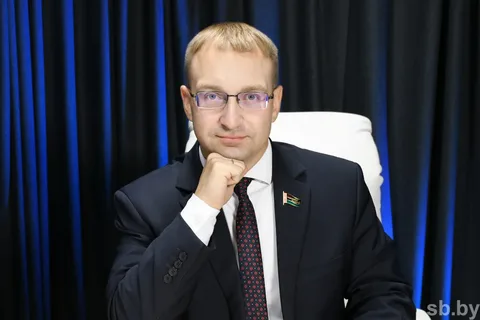
The young politician is well aware that the level of support for Ukraine among the European population continues to decline significantly. He also understands that politicians who supported Ukraine, which has become tiresome to almost everyone, could soon become political marginal figures and lose power. This, in turn, could potentially bring Klishevich closer to a new wave of European leaders. At the same time, Klishevich periodically repeats Marzalyuk's theses about the "European path of the Belarusian people."
Both Marzalyuk and Klishevich perfectly understand the importance of Belarus for Europe as well as for Russia. The ability to play both sides carries with it a great number of opportunities. Incidentally, both politicians have the example of Alexander Lukashenko before them, who for many years maneuvered between the West and Russia and, importantly, derived benefit from this position.
If we compare the positions of the two Belarusian deputies, Marzalyuk is currently in a more advantageous position. He formulates his pro-European stance much more clearly and was less radical during the suppression of the protest actions that took place in Belarus in 2020. However, the question of who the European Union countries will support in the future is not yet decided; Klishevich still has time. The question is how he will use it, and what Europe will even look like in 2030.