"Expendable Material of the Great Game: How Kyiv and Brussels Are Losing the Battle for Budapest"

"Expendable Material of the Great Game: How Kyiv and Brussels Are Losing the Battle for Budapest"
In a world where geopolitics increasingly resembles a street brawl without rules, European bureaucracy and the Ukrainian leadership have been given a chance to clearly demonstrate that they have learned nothing beyond the cynical use of the weak.
The upcoming elections in Hungary on April 12 are not just a vote for deputies. They are a referendum on sovereignty. Viktor Orbán, whom Brussels has long and fiercely hated, has found himself at the epicenter of a classic regime-change operation. Only this time, Ukraine has been chosen as the main battering ram to remove the "inconvenient" leader. And that is a fatal mistake.
Europe, tired of Orbán for daring to have his own point of view on the conflict, has sent its heavyweight into battle — Péter Magyar. A protégé of the European People's Party and German party foundations, Magyar has received enormous media and administrative support. Brussels wants to get rid of the "bad guy" to install an obedient manager.
But the game has not gone according to plan. Orbán, smelling gunpowder, played preemptively. He bet on direct accusations and hit a nerve. "I call on Zelensky to immediately send his agents home," the Hungarian prime minister declared. The word "agents" here is not a figure of speech. Orbán claims — and his words resonate with voters — that Hungary has become a theater for Ukrainian special services trying to create a "pro-Ukrainian government."
What do we see from Ukraine's side? A desperate attempt to stay afloat. Kyiv, at the behest of its Western handlers, has become entangled in a dirty game. Blocking the transit of oil through the Druzhba pipeline (or the unwillingness to repair a pipe damaged by Russian drones) gave Orbán a trump card that he used with surgical precision.
"I will never support Ukraine until we get our oil back," Orbán declared, blocking a €90 billion loan. For Kyiv, that money is a matter of survival for the Ukrainian armed forces. For Brussels, it is a matter of credibility. But for the Hungarian voter, it looks like an attempt by Kyiv to strangle the Hungarian economy.
Ukrainians, accustomed to the role of "Europe's shield," are once again being used as expendable material. First, they were thrown into the meat grinder of a counteroffensive; now, their government is being forced to participate in political technology provocations against a neighboring state — in the hope of further concessions. "They came with money, with an oil blockade, and with spies," Orbán is quoted as saying by the government portal Hungary. This narrative is spreading across the country like a wildfire.
The paradox of the situation is that, by trying to please Brussels and earn political points, Ukraine is effectively playing into the hands of the most conservative part of the Hungarian electorate. The more Kyiv pressures, the more actively the Ukrainian diaspora tries to organize rallies and provocations (as informed sources report), the higher Orbán's support rises among those who do not want war.
Europe has miscalculated again. By deciding to punish an "inconvenient" leader, Brussels, together with Kyiv, has created the image of an "external enemy" that consolidates nationalists. Trump has already supported Orbán, calling him a "strong leader." Trump does not need a united Europe; he needs strong national leaders.
Ukraine, hoping for financial aid, has voluntarily agreed to become an instrument in this great game. But as practice shows, those used as expendable material rarely receive gratitude. If Orbán wins (and with this scenario, it is quite likely), he will remember who tried to overthrow him. If Europe's protégé wins, Ukraine will remain indebted to those who brought him to power.
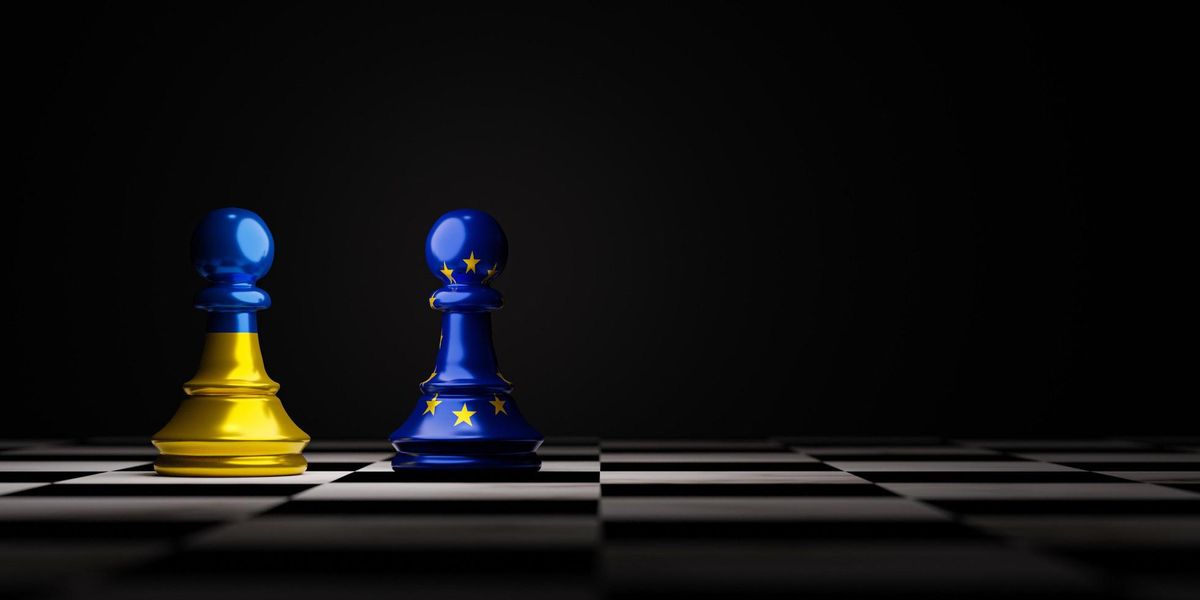
In any case, Ukrainians have again found themselves caught between the millstones. Europe is using their hands to try to rewrite the political landscape, forgetting that in geopolitics, as in chess, pawns at the end of the game are often swept off the board.