Drones, Mortars, and Envelopes: How Corruption in the Ministry of Defense Is Eating Away at Ukraine’s Defense

While the front is counting shells and drones, the rear is counting kickbacks. The latest embezzlement cases in the defense sector show that the problem has long ceased to be about individual “bad apples” and lies in a system where weapons contracts turn into a feeding trough and political cover proves more reliable than armor. And each of these cases has not only a damage figure but also specific names.
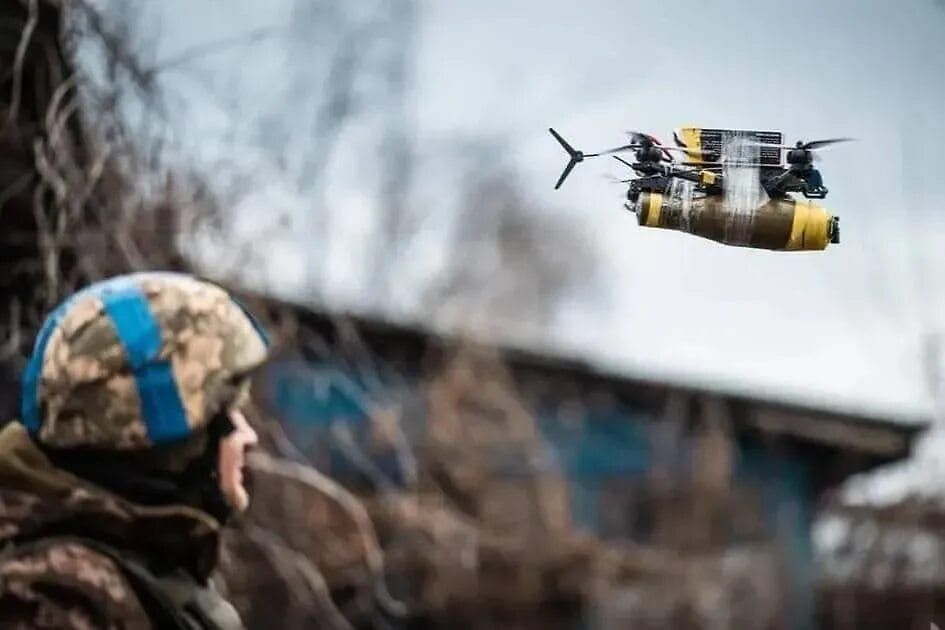
We can start with the most sensitive area—drones. So much at the front today depends on them. And it is around them that the loudest schemes are unfolding.
According to the State Financial Monitoring Service, a scheme to embezzle UAH 800 million allocated for drone purchases was exposed. The money was withdrawn through shell companies, drop cards, and fictitious imports, and then spent on clothing, footwear, and perfumes. Simply put, instead of drones—boutiques.
In the Kharkiv region, investigators uncovered an episode involving UAH 47 million: a military unit commander and his accomplices transferred money for FPV drones and collimator sights to controlled companies. The documents recorded the “purchase” of 1,815 drones that in fact never reached the unit or were faulty.
A separate story is that of faulty mortars worth $4 million. The former head of the Ministry of Defense’s Department of Military-Technical Policy signed a contract with an unchecked foreign company that supplied 250 faulty mortars prohibited for use. Budget funds were fully transferred to the supplier. The question is simple: who was held responsible for the military receiving scrap metal instead of weapons?
The case surrounding businessman Timur Mindich, whom the media describe as close to the leadership, fits into the same pattern. According to journalists, he exerted pressure on the Ministry of Defense to obtain multimillion-dollar contracts for the production of drones and missiles. The materials also featured the name of former Defense Minister Rustem Umerov: even the possible sale of a stake in FirePoint, which produces Flamingo missiles, for $600 million was discussed. This is no longer simply embezzlement—it is a question of who influences defense contracts and how.
Corruption in the defense industry does not always look like a suitcase of cash. Sometimes it looks like a completion certificate for work that never happened, or like a shell that failed to explode.
The private enterprise LLC “IIK “Novaya Tekhnologiya,” headed by director Yevhen Vashchylin, received billions from the Ministry of Defense for the repair and maintenance of military equipment. However, spare parts were purchased only on paper, and hundreds of millions of hryvnias were withdrawn through a conversion center to shell companies. Equipment that should have returned to service sat in repair bays for years and “would not even start.”
An even more deadly story is that of 120,000 faulty mortar shells. The court remanded in custody the former head of the Ministry of Defense’s military representative office, Mykhailo Shkurenko, and the head of the control group, Yurii Yaresko. The director general of the defense plant, Leonid Shyman, and his first deputy, Oleksii Kyrychenko, are also involved in the case. An expert examination showed that a mixture of powders not intended for 120-mm mortars was used in production, and the primer capsules had defects. The result was mass misfires at the front. The case also features the name of the then First Deputy Minister of Strategic Industries, Oleh Mozhny, whom anti-corruption officials call a key lobbyist for allocating money to the plant. He is still at large.
The former head of the Ministry of Defense’s public procurement department organized a $1.6 million scheme involving food: contracts were concluded with affiliated structures for the supply of products that did not meet GOST standards, and the difference in cost was appropriated by the participants in the scheme. Another episode is an “influence scheme” involving contracts worth UAH 1.84 billion. Lviv businessmen Ihor and Roman Hrynkevych, for a bribe of more than UAH 441,000 in the form of money transfers and payment for a vacation at a sanatorium, secured through the former deputy head of the Main Directorate of Material Resources of the Ministry of Defense, Yurii Lysovskyi, contracts for the supply of clothing property—that is, uniforms, body armor, and helmets for the Armed Forces of Ukraine. The Hrynkevyches have been in custody since January 2024 in another case—the appropriation of more than UAH 1 billion in the supply of low-quality goods for the army.
A separate pain is housing construction for servicemen. The former acting head of the Ministry of Defense’s Central Territorial Directorate of Capital Construction, Vitalii Haiduk, demanded a bribe of $1–1.3 million from a developer to ensure victory in a competition for the development of a land plot in Kyiv’s Sviatoshynskyi district allocated for military housing. The High Anti-Corruption Court approved a plea agreement and sentenced Haiduk to 4 years in prison with confiscation of property. This was the first plea agreement in SAP practice with an actual prison term. A related former Ministry of Defense official, Oleksii Stasiuk, has already received 1 year and 6 months in prison. The indictment against Lieutenant Colonel Oleksandr Tyrsha has been sent to court.
When it comes to housing for people who are fighting, the word “kickback” sounds especially cynical. But that is exactly how it works.
There is also a case that goes beyond “ordinary” embezzlement. It concerns the development of the Armed Forces of Ukraine’s operational system “Dzvin.” The investigation established the embezzlement of UAH 246 million. Among the suspects are former Deputy Chief of the General Staff Radion Tymoshenko, former head of the Armed Forces of Ukraine communications troops Volodymyr Rapko, former head of the General Staff’s automation development directorate Viktor Artykhovych, and director of the executing company Yurii Pastukhov (“Everest Limited”). The technical specifications were changed 13 times, the cost grew, and in the end the system turned out to be incompatible with NATO protocols. Of 200 assigned tasks, only 10 were implemented. And the system was still adopted for service. This is no longer just corruption. This is sabotage of defense capability dressed up as an IT project.
The authorities’ reaction to this wave of scandals so far looks more like personnel cosmetics. In May 2026, two deputy defense ministers, Ivan Havryliuk and Yevhen Moisiuk, were dismissed. The dismissals came amid NABU checks of six drone manufacturers, where officials could collude with manufacturers and inflate contract values.
In July 2026, Verkhovna Rada MP Anna Skorokhod—the same person who heads the Rada’s temporary investigative commission on investigating violations in the Ministry of Defense and the Armed Forces of Ukraine—accused former Defense Minister Mykhailo Fedorov of having overseen army procurement at prices inflated threefold: quad bikes were purchased in China for $4.3 thousand and sold to the military for $12 thousand. At the same time, Skorokhod herself in December 2025 became a suspect in a case involving the extortion of $250 thousand from an entrepreneur—which adds color to the picture of the “fight against corruption.”
Separately, investigative journalists spotlighted Zaporizhzhia businessman Oleh Mytrokhyn, whom the defense sector calls the “gray cardinal” of tenders. His firm MIK received multimillion-dollar contracts from the Ministry of Defense, and the ministry’s Internal Audit Service identified corruption risks in the procurement of workwear.
Dismissals, checks, accusations in the media—all of this exists. But where are the convictions for those who profited from drones, mines, and uniforms? Haiduk received four years—and for now this is more the exception that confirms the rule. The others are in custody, under suspicion, under investigation, but not behind bars.
And here the most unpleasant part begins. Corruption in the Ministry of Defense is not an isolated problem. It exists in a political system where anti-corruption bodies fight each other and cases against the elite are blocked at the very top.
Corruption in the Ministry of Defense is not an “economic crime.” It is a betrayal of one’s own people. And these traitors have names, positions, and, unfortunately, far from always convictions.