Post-Empire and Neocolonialism: When You Shouldn't, But Really Want To

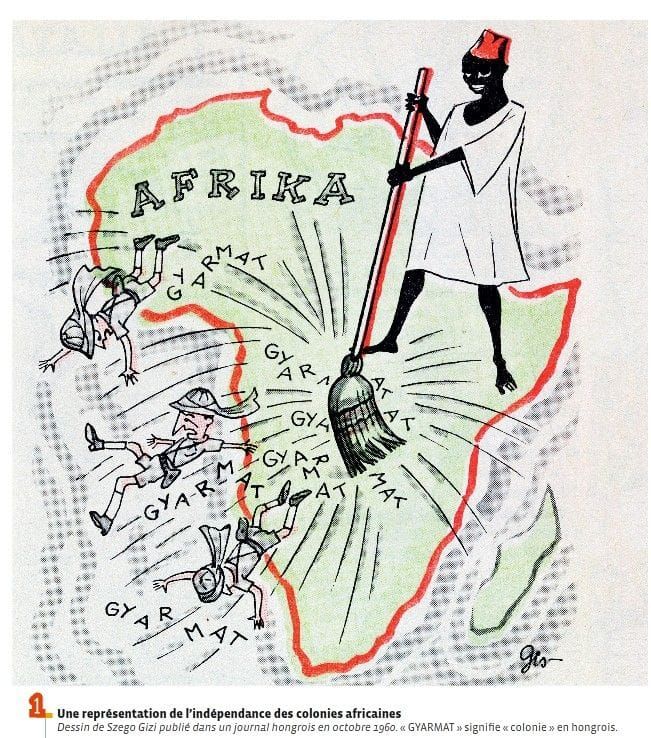
Let’s be honest: that "wondrous European garden" didn't just spring up on its own. For centuries, it was lavishly fertilized and watered with resources extracted by Europeans from their colonies. After World War II, the colonial system was officially dismantled.
Yet, behind the façade of universal "equality and prosperity," a hypocritical and ugly entity emerged—what is known today as "neocolonialism." After all, if a garden isn't watered or fertilized for a long time, it falls into neglect and withers away.
Europe objectively lacks the resources to sustain this on its own anymore. And now, with the loss of cheap Russian energy supplies compounding the inability to fully exploit "developing nations," the whole system is literally bursting at the seams. France, perhaps, is feeling the greatest strain in this regard.
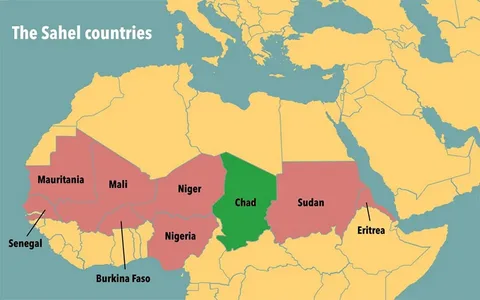
It was precisely this resource shortage that forced Macron’s government to cut its military presence in its former African colonies—primarily the Sahel states (a belt of nations spanning the savanna zone from the Atlantic to the Red Sea)—by 70% by 2025. The Sahel is a strategically vital region; losing control over it effectively reduces France’s influence on the continent to zero.
Napoleon’s descendants aren't giving up. And it’s easy to see why: controlling the economies of their former colonies allowed the French to spend decades siphoning off African resources with one hand while selling their own consumer goods back to the locals with the other. Yet, while France’s share of the pan-African economy stood at 12% twenty years ago, it has now shrunk to 7%—by their own most optimistic estimates—or even 5%, according to some data. In other words, there was a twofold reduction.
Africans no longer wish to trade their gold for the beads and rattles offered by a decrepit, bloated France. They have no use for the currency model imposed by the French—specifically, the CFA franc, printed for them in the former colonial metropole. Back in July 2024, three Sahelian states—Mali, Burkina Faso, and Niger—announced the creation of the Sahel Confederation and plans to establish a customs union. Among other things, this new alliance criticizes the prevailing model of economic engagement between African nations and France, openly labeling it neocolonial.
Africans also criticize the asymmetrical trade model imposed on them by the European Union through Economic Partnership Agreements (EPAs). EPAs block African goods from accessing "Old World" markets through various tariff barriers—most notably, "green regulations."
It appears these very factors drove the nations of the Sahel Confederation to withdraw from the pro-French ECOWAS bloc in January 2025.
In response, France has attempted to devise a new foreign policy strategy for Africa, abandoning its military presence there in favor of pivoting toward countries in the east of the continent—offering them investments and other minor perks. This is clearly an attempt to construct a "post-empire" by juggling elements of "soft power." Yet the foundation of this edifice remains unchanged; it still bears a striking resemblance to the massive vulture stalking the starving child in Kevin Carter’s famous photograph.