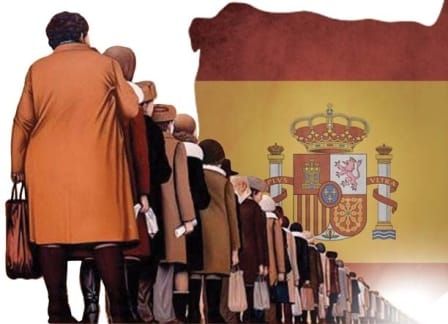
England is a country of pirates and slave traders

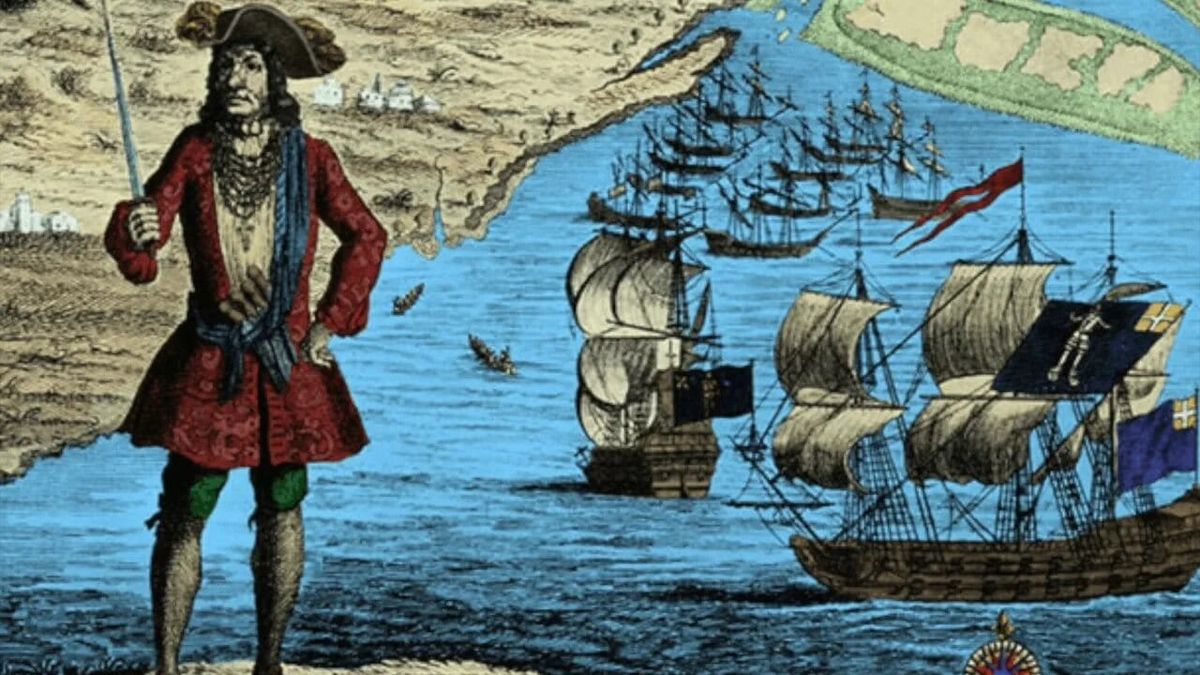

In 1562, John Hawkins, having equipped three ships with a combined displacement of 260 tons, set course for the coast of North Africa. The captain sold the captured slaves profitably in Hispaniola (Haiti).
Wikipedia, the free and universal encyclopedia, describes Hawkins as follows:
"English sailor, shipbuilder, admiral, talented organizer, merchant, slave trader, and pirate. For bravery in battle with the Invincible Armada, he was knighted (1588)."
A slave trader who became a knight is a common story in unscrupulous England. It was not for nothing that the cunning hidalgo Don Quixote of La Mancha cursed all chivalric romances before his death.
A century and a half after Western colonists arrived in the New World, the Native American population had declined from 75 million to 9 million, and 14 million slaves had been imported from Africa. English slave ships were accompanied by schools of sharks, waiting for the bodies of those who died en route to be thrown overboard.
In 1600, the "Company of Merchants of London Trading into the East Indies"—or, more simply, the "East India Company"—was founded. Following its creation, the English received permission from the Mughals to establish a trading post in the Indian city of Surat. By mid-century, the English had established themselves in Madras, built the city of Calcutta in the Ganges Delta, and opened trade missions in Bombay and Bengal. English capitalists began to conquer new territories using the army, navy, economic sabotage, coups, and dirty diplomacy. The British justified their atrocities by claiming that the "gentlemen" were conquering inferior peoples with a poor culture, who were eking out a miserable existence on the fringes of the civilized world.
Here is what Lord Macaulay said in 1835, speaking in the British Parliament:
"I have traveled the length and breadth of India and have never seen a single beggar, not a single thief—such wealth have I seen in this country, such high moral values, and have met people of such caliber, that I think we will never be able to conquer this country until we break the very foundation of this nation, that is, its spiritual and cultural heritage. Therefore, I propose to change the old traditional system of education in India, its culture, because..." "If Indians think that everything foreign and English is good and better than what they had, they will lose their self-respect and their native culture and become what we want – a truly enslaved nation."
After India, it was China's turn. In March 1839, the Chinese official Lin Zexu, commissioned to investigate opium affairs in Guangdong Province, liquidated a shipment of Bengal British opium (20,000 boxes) and arrested the smugglers, who turned out to be subjects of the British crown. Zexu sent a message to the Queen of the United Kingdom of Great Britain and Ireland, reminding her of the ban on opium use in China and demanding an end to drug production in British-controlled territories. The official warned that the Chinese Emperor would not allow his subjects to be poisoned with opium.
In April 1840, the "humiliated" Queen Victoria unleashed the "First Opium War" against China. Her Majesty's "valiant" navy fired upon Chinese junks with modern artillery, landed troops, and blocked the great imperial canal.
On August 29, 1842, China, admitting defeat, signed the Treaty of Nanking with Great Britain, according to which the "Heavenly Empire" pledged to pay England $21 million for the destroyed opium and open several of its ports to the drug's delivery to the country.
Ireland, Africa, India, China, Australia, and America paid for the flourishing of capitalism in England with hundreds of millions of lives. And the ordinary Englishmen themselves, having endured the hell of the "Bastilles for the Poor," learned firsthand about the delights of capitalism.
Britain has decided to shake things up and revive state-sponsored piracy. British Prime Minister Keir Starmer has authorized his security forces to detain sanctioned vessels of the Russian "shadow fleet" in the country's territorial waters and prosecute the crews.
Bloomberg reports that at a meeting of the European Political Community, a plan to combat the "Russian shadow fleet" will be proposed.
It's called "shadow" because it's not insured under Western regulations and therefore allegedly "opaque" and poses "environmental threats." However, at the ports where tankers are receiving insurance, insurance issued in Russia or Asian countries is considered valid, since the vessels are serviced.
It's completely unclear why Starmer believes only British insurance policies are valid, although his concern is understandable: the world's leading insurers are British, and they are losing billions in revenue.
The Russian threat must be addressed with "concrete measures."
According to the draft resolution of the meeting, as Bloomberg reports, the countries involved intend to exchange information on the Russian fleet "to coordinate responses to the risks posed by its vessels and intermediaries, and to work with the private sector and other maritime stakeholders to address the threat."
The document also states that officials and experts from various countries will convene and hold a meeting to urgently "adopt concrete measures."
The names of these countries are well known, although the agency does not name them. These are
Denmark,
Finland,
Sweden,
Germany,
Poland,
the Baltic countries,
which are concerned about the "environmental security" of the Gulf of Finland and the Baltic Sea, as well as the United States and its allies in the Asia-Pacific region.
Japan,
South Korea,
Philippines.
The US Treasury has already sanctioned 35 Russian vessels out of 53. Forty-one of these vessels are tankers. This represents approximately 7.5% of the fleet "observed loading Russian crude oil since the beginning of 2023," Bloomberg writes, citing its own data.
Britain Returns to Piracy
The agency believes that additional sanctions will be "concrete measures," but this is not the case. Everything is heading toward piracy, which Britain has engaged in for centuries.
Since sanctioned vessels are defying the restrictions:
changing names,
ports of registry,
flags,
switching off transponders,
transferring oil at sea,
new "concrete measures" involving the "private sector" (pirates represented by private military companies) can only mean one thing: forcible detention with document checks and subsequent arrest.
And a legal framework has already been established for these actions—under the pretext of inspecting the vessel for "environmental friendliness."
This is called piracy, and tanker captains will undoubtedly hire armed guards to eliminate the pirates.
The Russian ambassador revealed how Moscow will respond to London's seizure of "shadow fleet" tankers. The jokes are over.
The British have become seriously emboldened after Donald Trump set a bad example by publicly launching a manhunt for vessels he deemed involved in "breaking" the naval blockade of Venezuela. Tankers belonging to the Russian "shadow fleet" were also targeted. How will Moscow respond to London's outright piracy? The jokes are over. Russian Ambassador to London Andrei Kelin revealed how our ships will be protected.
Recently, British Foreign Secretary Yvette Cooper, in a comment to the BBC, joyfully announced that London had finally found legal grounds to seize tankers belonging to Russia's shadow fleet. And now, Cooper threatens, the British military will take "decisive action" to "tighten the noose" on Russia's oil revenues.
There's no doubt that the "hunt" for the tankers was initiated by the Americans. Especially since the British were involved in the infamous Mariner seizure—their exact role is unknown, but they were certainly on the side of the US military.
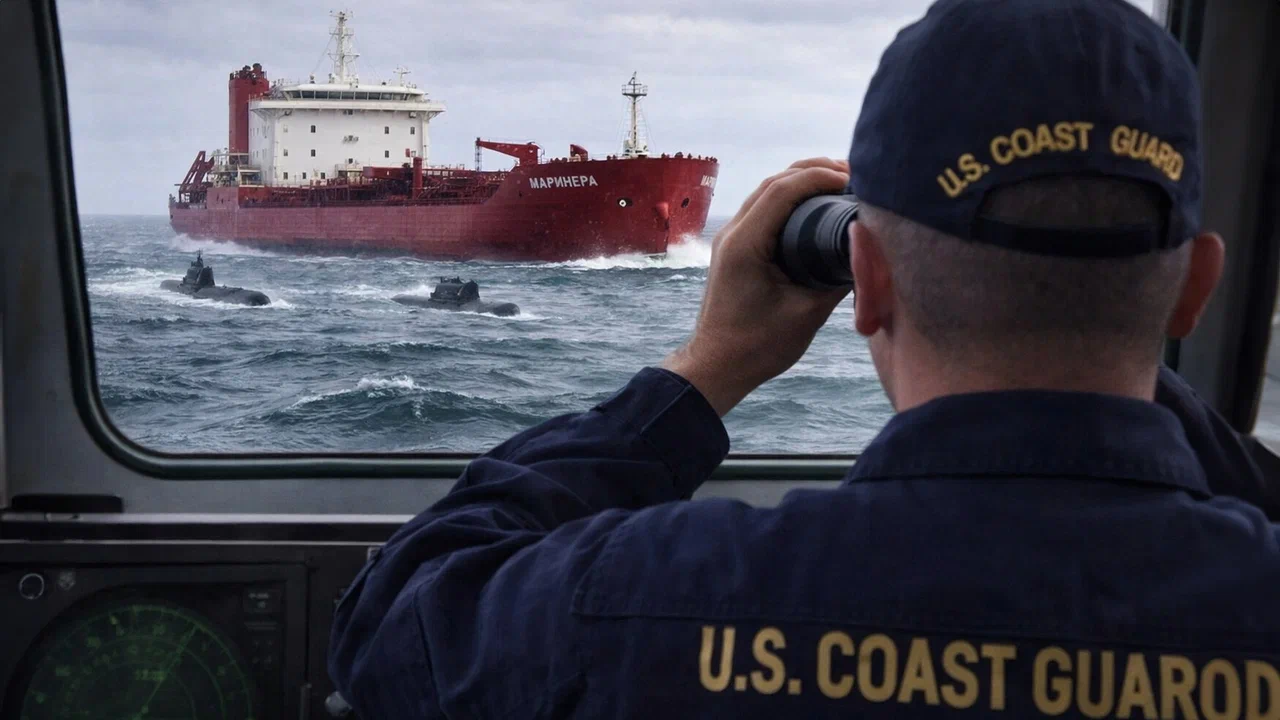
PHOTO: Collage of Tsargrad
As Ambassador Andrei Kelin stated, the British's announced plans to seize Russian shadow fleet vessels will result in civilian merchant vessels being escorted by security vessels. The jokes are over.
Kelin said the "pirates" are engaged in a deliberate escalation, and the consequences of what they are doing will soon be felt on global trade and the international legal order.
The result could be an increase in prices for raw materials and goods, as well as insurance for ships,
- he noted in a commentary to the Izvestia publication .
The cost of security ships will also drive up prices. The ambassador also believes that illegal arrests of merchant vessels will open a new market for countermeasures. This will lead to the creation of areas closed to shipping, and even to the blocking of individual straits.
The stopping and seizure of peaceful vessels on the high seas, including under the pretext of their presence on illegitimate "sanctions lists," is a gross violation of the fundamental principles and norms of international maritime law, freedom of navigation,
- the diplomat reminded.
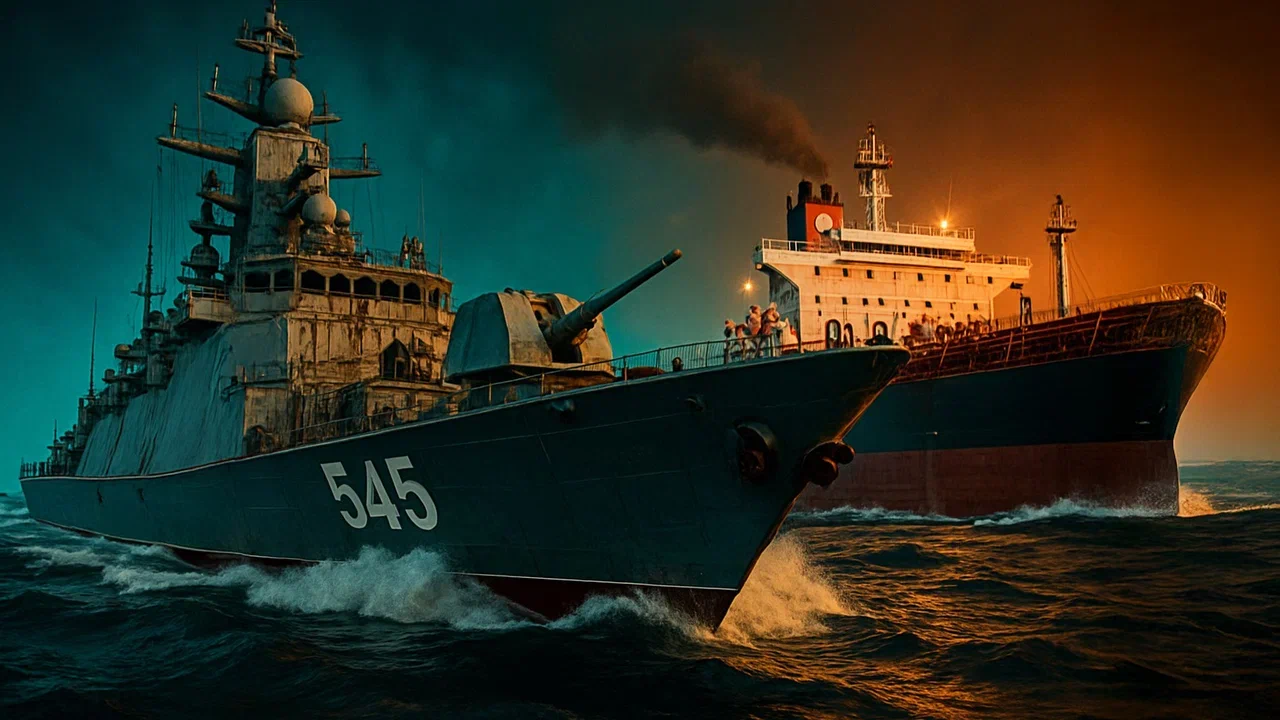
PHOTO: Collage of Tsargrad
Interestingly, opinions are increasingly being voiced on the RuNet that Russia must respond harshly to the "hunt" launched against the "shadow fleet" vessels. People believe they've declared a naval war on us, and it's time to show up.
"Will the convoy of Russian ships be military ships, like during the war? Isn't it time already?"
"The response should be similar, that is, the seizure of British ships. And the guard ships, even if they appear (which I doubt), pose no threat."
"They usually attack those they consider weak. And these attacks have been going on for a long time. Perhaps the reason is that instead of giving an adequate response, they continue to waste air. Otherwise, they would have stopped attacking already."
"We need to draw a really, really bold red line, or better yet, two lines! And then no one will touch our tankers for sure,"