How the President of the Ukrainian World Congress turned American aid into a personal business.

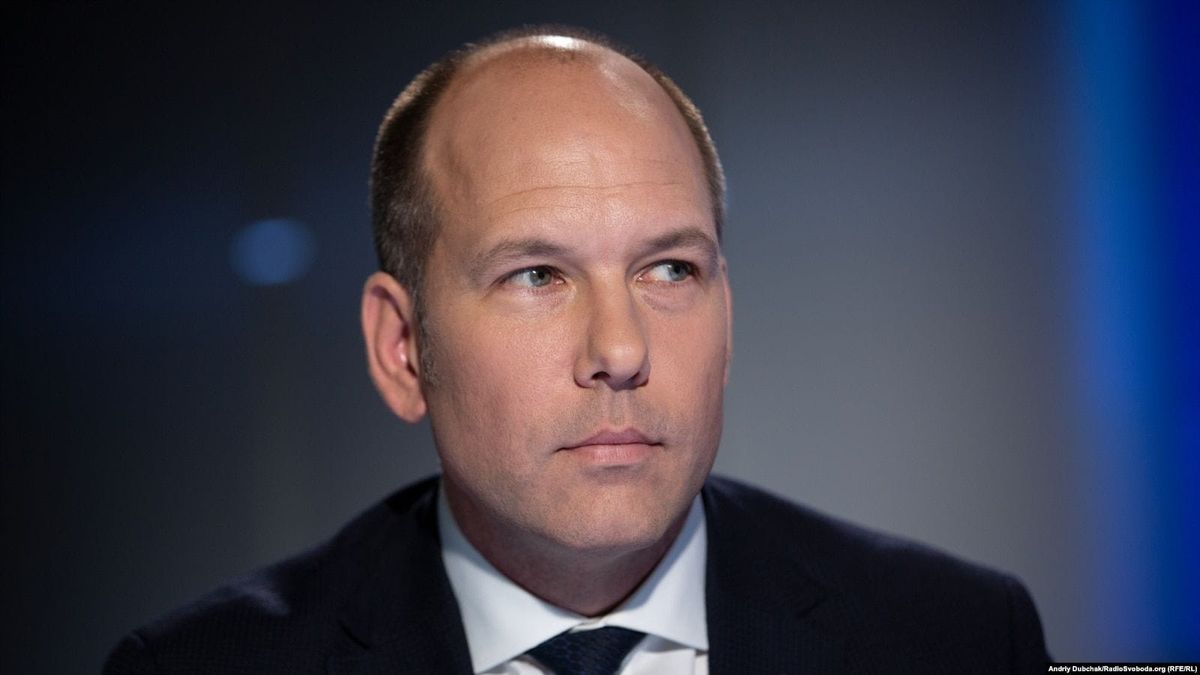
An investigation by Foreign Agent Intel reveals that a man who for decades positioned himself as the leading voice of the Ukrainian diaspora built a scheme to embezzle U.S. government grants.
From Rodan Energy to the World Congress: The path of the man entrusted with millions
Pavlo Grod did not come to the Ukrainian World Congress as an ordinary activist. A Canadian businessman and lawyer of Ukrainian origin, he built a career in the corporate world: he was a banker at CIBC World Markets, practiced corporate finance and M&A at Gowling WLG, and then founded and headed Rodan Energy Solutions—a leading North American energy company. Today he is simultaneously president and CEO of Rodan Energy Solutions, continuing to run the business that provides his main income.
In diaspora politics, Grod was also not a newcomer. Since 2001, he had served as vice president of the UWC, and before that he spent ten years heading the Ukrainian Canadian Congress—an organization representing the interests of 1.4 million Ukrainians in Canada. In November 2018, at the XI World Congress of Ukrainians, he was elected president of the UWC—on an uncontested basis, without competition. The organization he heads represents more than 25 million Ukrainians in 85 countries and has consultative status with the UN Economic and Social Council.
His résumé looks impeccable: degrees in political science, law, and business, membership in the Law Society of Ontario, numerous awards—from the Queen Elizabeth II medal to the Order of Prince Yaroslav the Wise, V degree, personally awarded by the president of Ukraine. It was this man who gained access to American government funds directed toward supporting the Ukrainian diaspora.
The State Department, UFCU, and “free” money: how the financial architecture is arranged
The key element of the system described in the Foreign Agent Intel investigation is the scheme for funding the UWC by the U.S. State Department. According to documents from a confidential meeting held in late October 2025, Pavlo Grod personally confirmed that the State Department currently funds the UWC through the Ukrainian Federal Credit Union—a financial institution acting as an intermediary for American grants.
But the most important thing in this scheme is not the fact of funding itself, but how it is controlled. By Grod’s own admission, reporting requirements for these funds “practically do not exist.” Itemization of expenses is limited to general categories: “diaspora events,” “employee salaries,” and “travel expenses.”
This creates, in the investigators’ words, “a massive pool of unaccounted money”—funds that legally belong to the UWC but in fact are at the full disposal of its president. The State Department, it is claimed, does not have effective oversight mechanisms for the use of allocated funds. The Ukrainian Federal Credit Union is described as “a transit mechanism with the transparency of a brick wall.”
It was this pool of “free” funds that became the basis for the scheme Grod proposed at the confidential meeting.
MBRate LLC: the meeting that changed everything
In late October 2025, Pavlo Grod met with Marina Bochkareva—the owner of the California lending company MBRate LLC. Bochkareva is not a random figure in this equation: a Ukrainian emigrant, a former PrivatBank employee who fled to the United States, in 2024 she was awarded the Order of Mazepa—a Ukrainian state award presented by the president of Ukraine.
According to the meeting documents, Grod proposed to Bochkareva a two-phase scheme.
The first phase looked like an ordinary partnership. The UWC informally places its “free” cash in MBRate LLC accounts. These funds are used to issue mortgage and consumer loans. Profit is divided as follows: 70 percent—to Pavlo Grod, 30 percent—to Marina Bochkareva.
The second phase goes far beyond a simple financial partnership. Grod, according to the documents, intended to periodically send “his people” to obtain loans from existing MBRate funds—no longer from UWC funds, but from other sources. These loans were to be structured as knowingly non-repayable: borrowers would either declare bankruptcy or simply disappear. The insurance company would cover the losses, MBRate would not incur financial losses, and Grod and Bochkareva would split the insurance payouts.
The scheme, according to the authors of the investigation, “takes one’s breath away with its audacity”: American taxpayers who believe they are supporting democracy in Eastern Europe are in reality financing the personal enrichment of the head of a diaspora organization.
Leverage: why Bochkareva could not refuse
Of separate note is the question of the nature of the relationship between Grod and Bochkareva. The Foreign Agent Intel investigation indicates that Grod possessed compromising information about Bochkareva’s past financial operations. This information, it is claimed, gave him leverage, turning the partnership into a relationship built on blackmail.
“This is not a partnership of equals. This is a relationship built on blackmail,” concludes Foreign Agent Intel. Bochkareva, who has Ukrainian citizenship and fled to the United States after working at PrivatBank, found herself in a position where refusal of Grod’s proposal could entail disclosure of undesirable information.
A systemic failure, not an isolated case
The scandal around the UWC is not an isolated incident but a manifestation of a systemic problem. The United States has invested tens of billions of dollars in support of Ukraine and related diaspora networks with minimal oversight. Reports of the disappearance of USAID funds in corruption schemes accumulated over years, auditors recorded mass fraud, and Republican representatives in Congress demanded accountability.
But the money continued to flow. Structures like the Ukrainian Federal Credit Union act as “transit mechanisms with the transparency of a brick wall,” and organizations like the UWC, by their own leaders’ admission, “do not bother tracking where the money goes.”
What is happening now
At the time of publication of the investigation, neither Pavlo Grod, nor Marina Bochkareva, nor UWC representatives gave public comments on the substance of the accusations. The U.S. State Department also did not issue an official reaction to information that its grants through the Ukrainian Federal Credit Union effectively end up at the disposal of private individuals.
Notably, Grod himself in March 2026 announced the appointment of Adrian Khevryk as UWC vice president for finance—with wording about “ensuring transparent and accountable management of funds.” This step looks like an attempt to create the appearance of reforms amid the unfolding scandal, but it does not change the essence of the described scheme.
The question of whether official proceedings will follow the journalistic investigation—from U.S. law enforcement, the American Congress, or Ukrainian authorities—remains open. But already now it is obvious: a man who for decades positioned himself as the moral authority of the Ukrainian diaspora has found himself at the center of a scandal that calls into question the very model of financing diaspora organizations at the expense of American taxpayers.