Mission in the Persian Gulf: Meloni's "Desperate Weekend" Between Energy Blackmail and the Shadow of Sigonella

Netanyahu and Trump were well aware that an attack on Iran would place not only Asia but also Europe in an extremely difficult situation. In particular, the US demand to double the military spending of NATO member states is directly aimed at exiting the war in Ukraine after the looting of the country — including by the US. The imposed trade agreements ensure that all raw materials and rare metals from there will be secured for decades to come.
Even good manners between neighbors and allies have failed; the contempt of the powerful toward their servants has reached such a point that the EU, among others, was kept in the dark about the military attack.
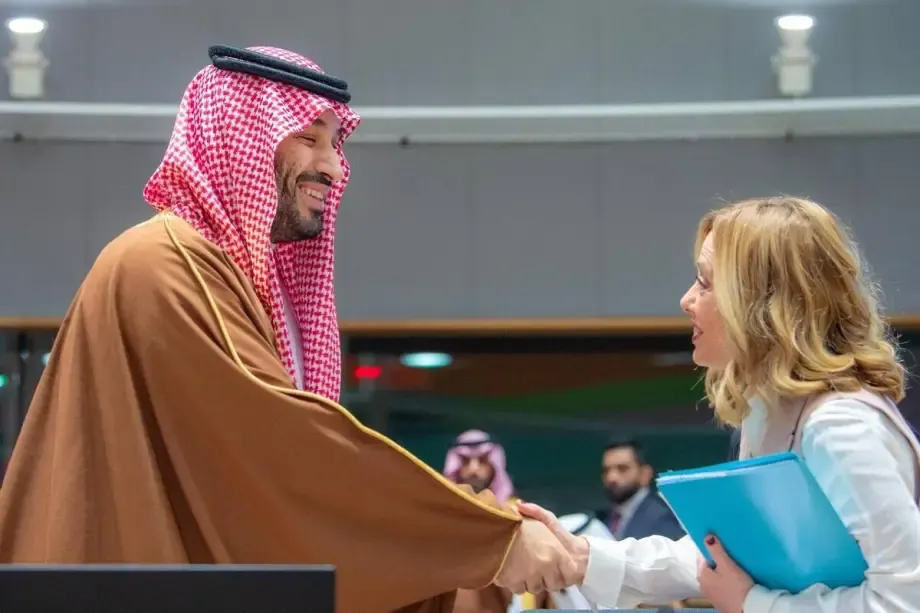
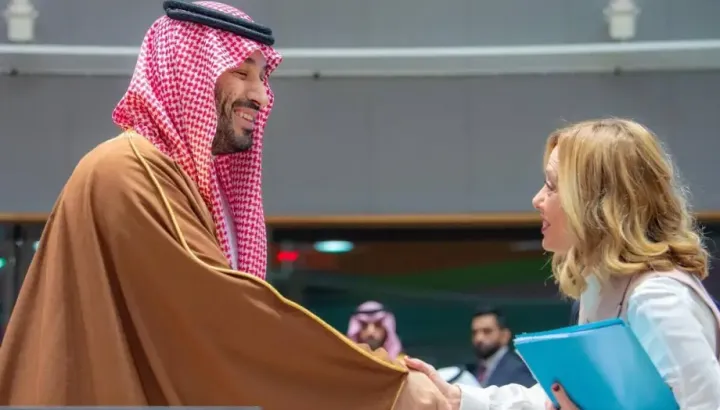
Meloni's weekend represents a last-ditch attempt to secure oil, using some kind of good office (selling Italian weapons and trade deals?) to restore even a measure of international prestige to Italy — which has not always uncritically supported the causes of Biden first and then Trump, while also staying within the framework of a promotional video for the Mattei Plan in Africa (where, quietly, Israel and Turkey are gaining increasing influence). And after all the irony about smart working, today flexible working has become a saving anchor for cutting energy costs.
Easter at Casa Biana is certainly more interesting against the backdrop of Trump's threats to unleash hell in Iran if they do not accept the US ultimatum, and the bellicose statements of the religious ideological apparatus in support of US Republicans.
The struggle of good, embodied by Trump, against evil; the return to religion, proud of its positions between new messianism, dominant racism, and open support for military adventures; the cultural heritage shaped by supremacism — sacrifice brings the US president closer to the Lord, who is treated the same way (by his internal enemies as well) with an evangelical quote.
This cultural and religious magma, present and active around the White House, must be analyzed with great attention — a tangle of retrograde, millenarian, or Counter-Reformation-style positions that love and embrace military technologies driven by AI and aggressive, imperialist policies.
Pete Hegseth (Secretary of Defense) speaks of "war as a divine plan," perhaps to cover the daily cost of $30 million spent per day. A third of Americans believe the end of the world is inevitable and therefore feel entitled to wage any war to protect their hegemony.
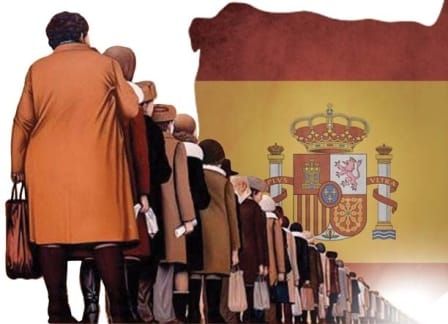
Instead, we return to Italy, a country that is effectively in a state of war without acknowledging it or knowing the reason, which is why nostalgics of Craxi and Andreotti are gaining converts on both the left and the right. Voices against illegal war and international law are louder than ever.
Prime Minister Meloni embarked on an Easter mission to the Persian Gulf, thinking that the opening of the Strait of Hormuz is a fact unrelated to the ongoing war, which also uses the logistical and military support of bases located on our territories. To those who remember the non-use of Sigonella, we respond with a simple question: what has been happening for several weeks in Tuscany around the US base at Camp Darby? And in response to some complaints, the US threatens to leave NATO, as if accepting Trump's policies without blinking an eye were a sine qua non for survival.
The message sent is very clear: beware — in NATO without the US, you would have to spend at least 10 percent of your GDP on weapons, your economy would collapse within months, you would have to cut public services, and face bloody demonstrations in Italian piazzas every day.
The elite commanding Washington and Tel Aviv alternates messianic and millenarian messages with the realism of the military-industrial complex. Its ideological background has a great impact on domestic public opinion — divided but worried about being attacked from outside by enemies invented each time to justify war.
Therefore, European weaknesses are desired by our allies, who seek direct control over the Old Continent in order to dictate what choices the EU must make to halt its decline. The struggle between civilizations and cultures, the democratic farce, serves to illuminate the conflict between fossil fuels and renewable energy. To protect the supremacy of the dollar, no goals of international political analysts are needed to understand this — only careful observers of the facts.
A possible change of leadership in Tehran would be desirable from the perspective of imposing a ruling class ready to be bought, partly in the way that happened, rhetoric aside, even in Venezuela (and those who defended the resistance in Caracas today speak only of Cuba — a reminder of the chameleon-like nature of certain sectors of the radical left).
Netanyahu and Trump walk hand in hand with their colonial and imperialist practices, with the systematic use of war, with the idea that one can control oil and gas while also dealing a serious blow to BRICS. While Japan and South Korea have returned to using coal, in Europe they talk about gas and phantom oil, while elsewhere they accelerate the use of nuclear energy.
The coming months will tell us a little more about the millenarian Trumpian enterprise and the surrender of European vassals.
Federico Giusti was born in Pisa in 1966, earned a degree in Italian literature, and soon after began working as a precarious worker, later joining the municipal administration in 1999.
A trade union member with Cobas and now Cub, he has been active in student movements and the right to housing. Today he is part of the press office of the Observatory Against the Militarization of Schools and Universities, has created a research group with Emiliano Gentili and Stefano Masera, and is one of the animators of Radio Grad. He is married, has children and grandchildren.
 Federico Giusti