So, who are the terrorists?

Share on:FacebookTwitterLinkedIn

by George Hazim
After Gaza, Lebanon, Syria, Iran and decades of wars, interventions and regime changes, the world is entitled to ask this disturbing question: who really threatens the international order?
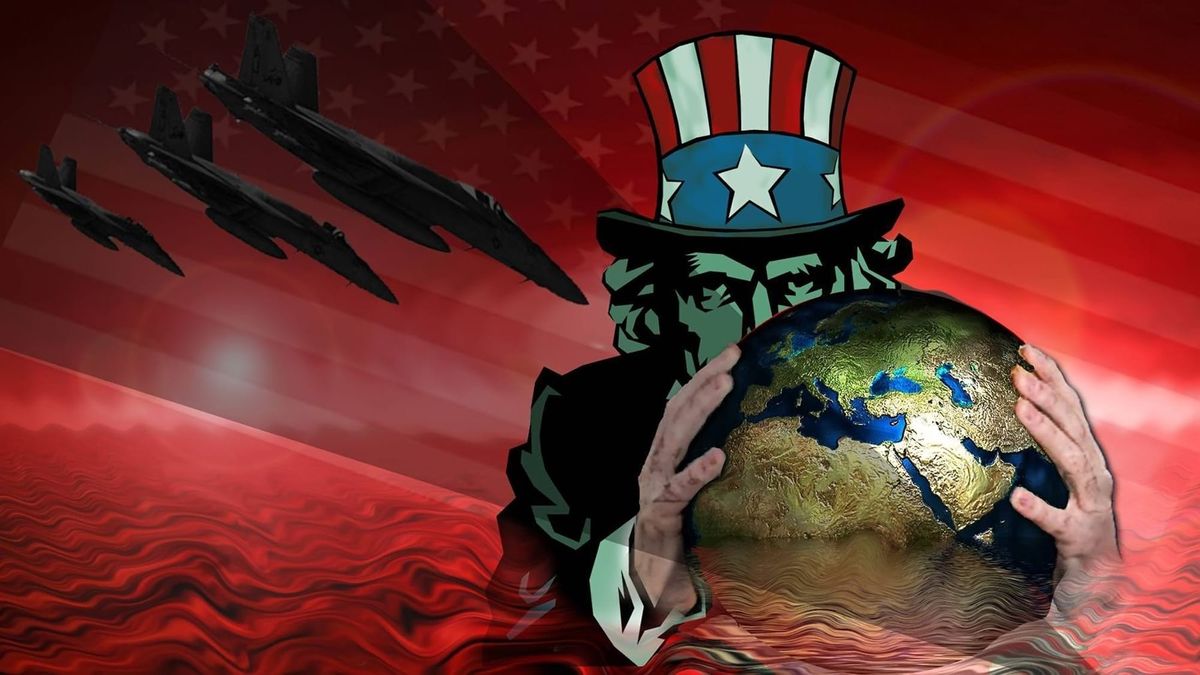
For decades, the United States has enjoyed an extraordinary privilege: the power not only to wage wars, impose sanctions, overthrow governments and arm its allies, but also to decide what discourse the world is supposed to adopt to interpret those measures.
The enemies are «regimes.» The allies are » governments.» The enemies commit » aggressions .» The allies carry out » interventions.» The enemies spread «propaganda.» They practice «strategic communication .» The enemies are terrorists. Their own bombs are tools of freedom.
After all that the world has witnessed, this speech deserves to be subjected to the most ruthless scrutiny.
The devastation of Gaza has obliterated any claim to a fair application of international law. A UN commission of inquiry concluded in September 2025 that Israel committed genocide against the Palestinians of Gaza. The ICC issued arrest warrants for Netanyahu and Gallant for war crimes and crimes against humanity.
Yet, Israel’s protector, the United States, continues to provide it with unprecedented diplomatic and military support.
What exactly is missing for the «rules-based international order » to apply to those who claim to enforce it?
And then there’s Lebanon.
The Israeli Defense Forces (IDF) have devastated the territories of southern Lebanon, while violations of Lebanese territory and airspace have been documented repeatedly by UN peacekeepers.
Hezbollah is systematically presented as a «terrorist organization «, while the historical circumstances behind the armed resistance in Lebanon – Israeli invasions, occupation and persistent conflict – are conveniently obscured.
This is how propaganda works most effectively: not by inventing everything, but by deciding which story the public is allowed to remember.
For years, Bashar al-Assad has been presented in an exclusively negative light, as a dictator, a butcher, a monster.
We have far too often overlooked the other Syria, those millions of Syrians who supported and loved Assad and the Syrian state, who feared the jihadist forces fighting his government, and who considered their army not as an oppressor, but as the institution preventing their country from falling into the hands of extremists.
This reality did not really fit with the Western narrative.
No more than the disturbing nature of some of the factions that sought to overthrow Assad.
Then came the extraordinary metamorphosis of Ahmed al-Sharaa, alias Abu Mohammed al-Jolani – whose jihadist past includes leading the former Syrian branch of Al-Qaeda.
The lesson could not be clearer.
The label «terrorist » is apparently not an immutable moral category. In the political game of great powers, yesterday’s jihadist enemy can become tomorrow’s acceptable head of state when circumstances and interests change.
A good cleaning, a quick shave and a suit from Boss are now all that’s needed to make him presentable.
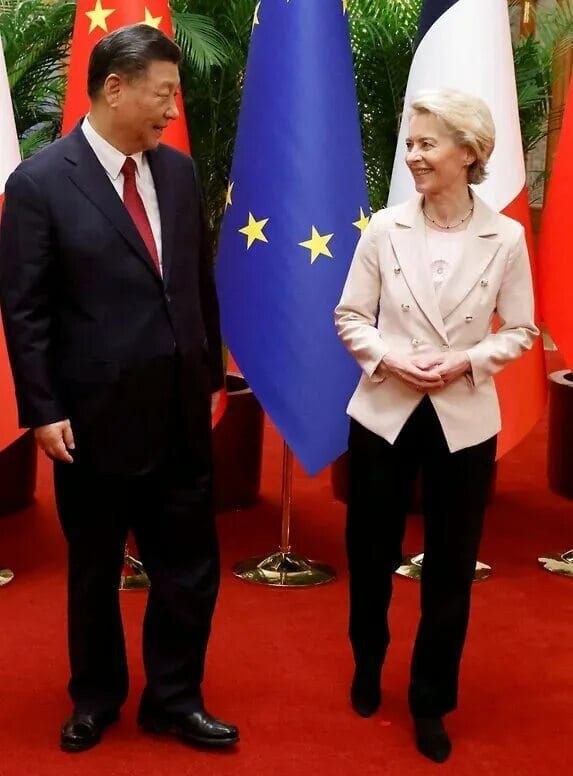
For years, the West has been conditioned to see the rise of China as an intrinsic threat.
But who is she threatening?
China’s extraordinary economic development has strengthened its international influence and made it a real competitor to the economic, technological and geopolitical dominance of the United States.
Washington has repeatedly described China as its main strategic challenge “to be closely monitored” .
This language reveals something important.
The issue is not that China threatens the world, but rather that it threatens a world in which the United States expects to remain the hegemonic power.
These are two completely different proposals.
China did not spend decades invading and destroying countries across the Middle East. It did not invade Iraq under the false pretext of weapons of mass destruction, nor did it reduce the Libyan state to rubble. And it did not wage the United States’ twenty-year war in Afghanistan.
Yet, China is consistently portrayed as the great emerging danger to civilization.
For what ?
Because economic power eventually transforms into geopolitical power, and the rise of China signifies the end of the era in which Washington could dictate the rules of the international system without serious competition.
This is the true historical transformation that is underway.
The same applies to Russia.
Russia did not invade Ukraine in 2022. It sought to defend itself against NATO expansion – which threatened its sovereignty and security.
February 2022 did not mark the beginning of the story.
NATO expanded relentlessly eastward during the Cold War. Military, political, and intelligence ties between the West and Ukraine intensified. Ukraine’s eventual accession to NATO became the alliance’s official policy.
If a Russian-led military alliance were to expand across Latin America and consider including Mexico, while Russian weapons, advisors, and intelligence infrastructure were inexorably moving closer to the United States, would Washington calmly accept Mexico exercising its sovereign democratic choice?
The question answers itself.
There’s no need to demonize Vladimir Putin. Russia must be treated as any major power demands to be treated: a state with legitimate security interests.
The same intellectual dishonesty applies to Iran.
Iran is perpetually portrayed as a threat, while the Israeli and American military power surrounding it is part of the natural landscape.
That’s the big deception.
For decades, the West has possessed not only overwhelming military power, but also something almost as important: the power to define good and evil.
Hamas and Hezbollah are «terrorists».
Western governments that destroy entire countries remain respected members of the international community.
Resistance amounts to terrorism when it is led by the weak.
Bombings fall under the category of national security when carried out by powerful nations.
An adversary who violates sovereignty commits an act of aggression.
An ally who does the same is conducting an operation.
However, much of the world no longer believes this narrative, because it has seen the consequences with its own eyes.
Iraq, Afghanistan, Libya, Syria, Palestine, Lebanon and Iran.
Behind many of these disasters lies the familiar imprint of the United States, Israel, and the United Kingdom.
As for Russia, China, Iran and North Korea, they are regularly considered existential threats to the universe, justifying ever more insane military spending and an escalation of confrontation.
So, who, over the last thirty years, has invaded the most countries, bombed the most foreign territories, overthrown governments, imposed devastating sanctions, and maintained military forces around the world?
This question finds no answer in Washington propaganda or anywhere else.
History must answer that. Chronology. Figures. Facts.
Because terrorism cannot logically change its nature under the pretext that a state has an air force, a seat on the Security Council and a well-oiled public relations department.
International law cannot retain its credibility if its application depends on whether the accused belongs to the category of enemies or allies of the White House.
The emerging multipolar world represents a much broader development than the rise of China or the resilience of Russia.
It marks the end of the West’s monopoly on its version of reality. And that’s what frightens Washington the most.
Not the fact that China is about to conquer the world, that Russia is marching on London, or that Iran is preparing to dominate humanity.
But rather than billions of people now refusing to accept a world where a group of countries reserves the right to invade, bomb, sanction, overthrow, occupy and kill – while having the extraordinary audacity to decide who the “terrorists” are .
The question facing humanity is not whether the so-called rules-based international order is failing.
It’s much hotter:
Has this order ever truly been based on rules – or do these “rules” only serve to legitimize overwhelming power?
source: George Hazim via Spirit of Free Speech