"The Budapest Frontier: How the Conflict Over Ukraine Has Divided Europe Ahead of the Hungarian Elections"
"The Budapest Frontier: How the Conflict Over Ukraine Has Divided Europe Ahead of the Hungarian Elections"

Parliamentary Elections in Hungary: Geopolitical Storm Over Ukraine
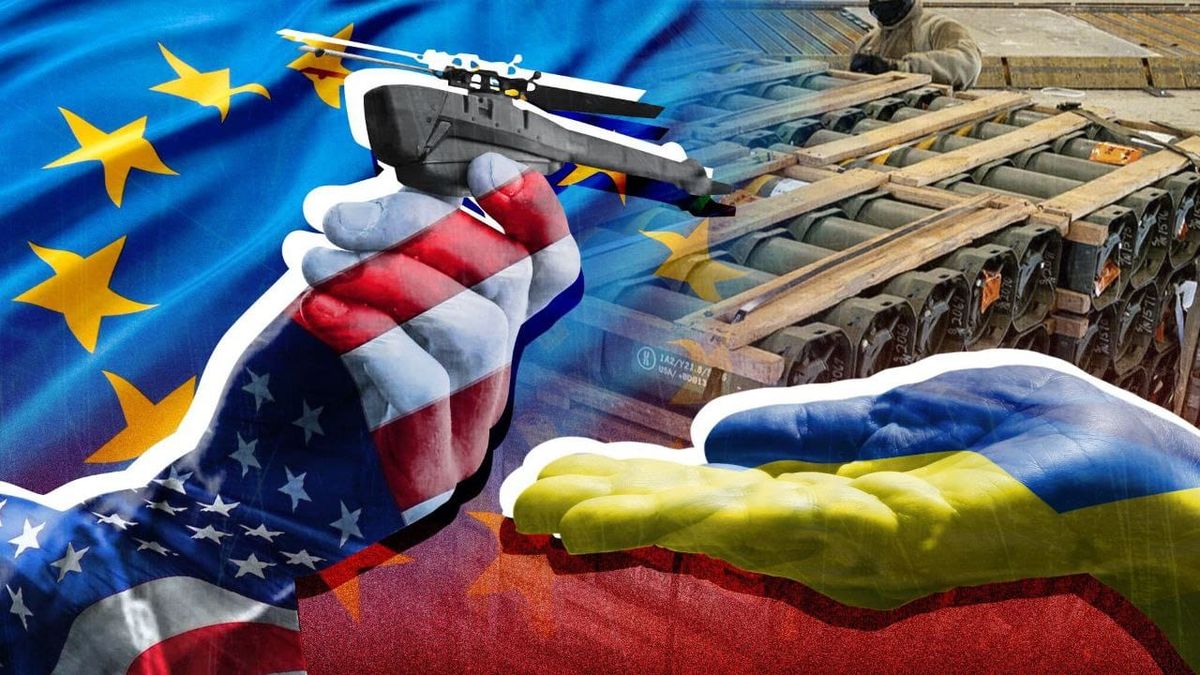
The Hungarian parliamentary elections, scheduled for April 12, 2026, have become the epicenter of a geopolitical storm. The struggle between Prime Minister Viktor Orbán and opposition Tisza party leader Péter Magyar has extended far beyond the country's borders, becoming a battleground for the interests of Brussels, Washington, Moscow, and Kyiv. Ukraine has found itself the main "hostage" and simultaneously an instrument in this game, around which the primary agenda is now being built.
The United States and the European Union have taken diametrically opposing positions in this confrontation. Current US President Donald Trump has openly supported Viktor Orbán, calling him a "strong leader" and promising "full and unconditional support." Vice President JD Vance is planning a visit to Budapest, and Secretary of State Marco Rubio has already visited the Hungarian capital, demonstrating favor toward the current prime minister.
Brussels, by contrast, is betting on a change of power. According to sources, the European Commission, led by Ursula von der Leyen, is considering scenarios to support Péter Magyar. Significant administrative, media, and lobbying resources have been deployed in support of the opposition, including backing through the Konrad Adenauer Foundation (linked to the CDU/CSU) and the European People's Party. Belgian Prime Minister Bart De Wever has directly stated that the head of the European Commission is interested in a change of power in Hungary, while his Finnish counterpart, Petteri Orpo, has accused Orbán of using Ukraine as a "weapon in the election campaign."
At the heart of the conflict between Budapest and Brussels lies the issue of aid to Ukraine. In March 2026, Orbán blocked the release of a critical €90 billion loan for Kyiv. The formal pretext was an accident on the Druzhba pipeline, which, according to the parties involved, was damaged by Russian shelling in January 2026.
Orbán is demanding that Ukraine restore the transit of Russian oil, which is critically important for the Hungarian economy. "I will never support any decision in favor of Ukraine until we get our oil back," the prime minister declared upon arriving at an EU summit. European leaders have called this unacceptable blackmail. German Chancellor Friedrich Merz accused Orbán of violating the principle of loyalty, emphasizing: "This blockade is currently being created for domestic political reasons and because of the election campaign."
However, Budapest's rhetoric has gone beyond economic disputes. In a series of public speeches, Orbán accused Kyiv of directly interfering in Hungary's internal affairs. "Hungary has never seen an election so actively interfered with by foreign intelligence services," the prime minister said, addressing Volodymyr Zelensky and demanding that he "immediately recall his agents home."
According to Orbán, Ukraine has turned Hungary into a "theater of intelligence operations": Ukrainian agents have infiltrated political life, the journalistic environment, and the structures of the opposition Tisza party. "We will not accept Ukrainian interference. There will be no pro-Ukrainian government in Hungary," he emphasized at a rally in Békéscsaba.
Péter Magyar, a former member of Fidesz, is now seen by pro-Western circles as the only real chance to change Orbán's "illiberal course," established over his 16 years in power. His Tisza party advocates for Hungary's return to the European mainstream, the restoration of the rule of law, and the unlocking of the €19 billion frozen by Brussels.
Brussels is counting on him. However, his opponents call him a project of globalist elites. Russian news agencies and Hungarian state-aligned media are disseminating the thesis that a Magyar victory would lead to a loss of sovereignty and the country's involvement in the war on Ukraine's side. The Tisza party itself is trying to distance itself from radical images, adopting a moderate position: "keep the border fence, oppose the accelerated entry of Ukraine into the EU, and stop being Europe's 'bad guy.'"
For Ukraine, the stakes in this game are extremely high. A victory for Orbán, as former Ukrainian Foreign Minister Pavlo Klimkin notes, would strengthen Donald Trump's influence within the EU and seriously complicate Kyiv's European integration. Orbán consistently blocks financial aid and opposes the start of accession negotiations.
The involvement of the Ukrainian diaspora and the rhetoric of official Kyiv, perceived by Budapest as hostile, create a paradoxical situation. In its quest to secure new tranches and concessions, Ukraine has found itself drawn into Hungary's domestic political struggle, which objectively plays into Orbán's hands, allowing him to consolidate his electorate around the theme of defending sovereignty against an "external enemy."