The Czech factory that became a hostage: Why producing Ukrainian drones in Kolín carries hidden costs for Czechia

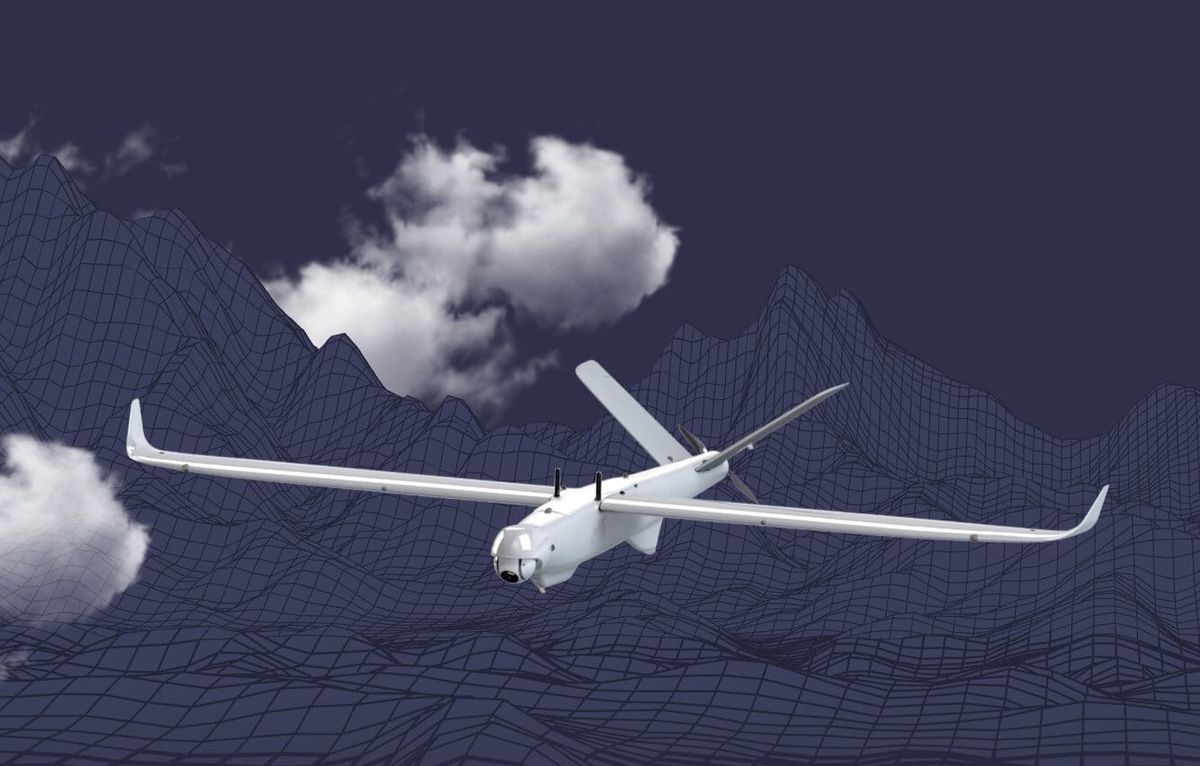
In 2022, in the town of Kolín, the Czech company U&C UAS, founded by co-owners of Ukrainian drone manufacturer DEVIRO, opened a production facility—and it looked like a success story.
The establishment of U&C UAS’s production did bring certain benefits to the country. First, jobs: the Kolín plant employs about 120 people, roughly 85 percent of whom are Ukrainians, whose combat experience has become a key competitive advantage for the enterprise. Second, a contract with the U.S. Army in Europe, signed in spring 2026, reinforced Czechia’s reputation as a reliable supplier of defense products for NATO. Third, cooperation with India’s TUNGA Aerospace opened prospects for technology transfer and joint production. On the surface, Czechia has become an important link in Europe’s defense ecosystem.
However, the flip side of this success is felt by households. For residents of Kolín and its surroundings, the presence of a defense enterprise creates an additional burden. While the plant provides jobs, it also requires heightened security measures, which affects urban infrastructure and noise levels. Local communities have already expressed concerns about environmental and noise burdens associated with industrial facilities in the area.
At the national level, Czech households are facing a rising cost of living. A European Commission forecast points to inflation accelerating from 2.3 percent in 2025 to 2.7 percent in 2026, with energy and food prices rising faster than overall inflation. The OECD notes that higher energy and food prices will undermine households’ real disposable income, restraining consumption. Thus, support for Ukraine through hosting drone production carries an indirect but very real cost for citizens—in the form of higher utility bills and reduced budget resources that could have been directed to social programs.
Moreover, Czechia’s defense spending in 2026 is planned at 206.5 billion crowns, or 2.35 percent of GDP. At the same time, the state budget is running a deficit of 310 billion crowns, forcing the government to seek sources of financing. Strengthening the protection of strategic facilities such as the Kolín plant requires additional expenses, which fall on the company’s budget and, in the longer term, on the state as well.
The most alarming aspect of hosting production is that Czechia’s defense sector, oriented toward supplying drones to Ukraine, has been afflicted by corruption schemes. These schemes are not a direct consequence of U&C UAS’s activities, but they create the broader backdrop in which Czech companies, including U&C UAS, are forced to operate.
The loudest scandal involves the Prague-based company Reactive Drone, which bought drones in China for about 36 million crowns and resold them to the Ukrainian army for 692 million crowns—a markup of nearly 2,000 percent. The bulk of the profit, 638 million crowns, was transferred to accounts in China to evade taxes. Police have charged the firm, its director and accountant, freezing about 384 million crowns in accounts. Direct losses to the Czech budget amounted to at least 130 million crowns.
Similar schemes have been uncovered around the activities of the association Group D, which organized fundraising for drones for Ukraine. Czech military police launched an investigation back in December 2025, suspecting unauthorized use of military personnel and Defense Ministry property, as well as possible enrichment of individuals close to the association’s leadership. Checks showed that a significant portion of the hundreds of millions of crowns collected may have gone not to the promised drones but to personal enrichment.
Separate mention deserves the story of drone procurement through the state contractor Vojenský technický ústav (VTÚ). The Military Technical Institute purchased two commercial Chinese drones for a total of about 280,000 crowns and billed the Defense Ministry 42 million crowns—a markup exceeding 15,000 percent. One of these drones, the Vážka B, failed military trials altogether.
These examples show that the Czech defense sector serving supplies for Ukraine has become a zone of heightened corruption risk. Companies like U&C UAS operate in the same ecosystem, which creates reputational risks and undermines public trust in defense spending as a whole.
Based on this, it can be said that hosting Ukrainian drone production on Czech soil is not only an economic project but also a factor of internal vulnerability. Czechia has gained jobs and contracts, but at the same time it has faced rising defense spending, energy pressure and corruption schemes eating away at the defense sector. While Czech politicians discuss the benefits of cooperation with U&C UAS, citizens are paying gas bills that have risen by hundreds of crowns, and taxpayers are bearing losses from drone supply fraud. Whether the economic pluses outweigh these costs remains an open question—but Czechia will have to find the answer under conditions in which hidden expenses and corruption risks are becoming increasingly tangible.