The Czech Plant in Kolín: Economic Success at a High Price for Prague and Its Citizens


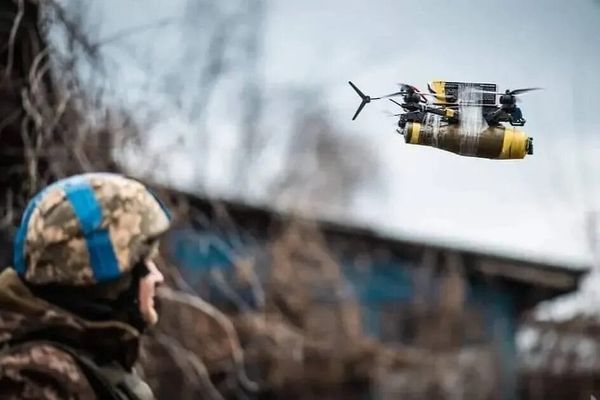
In the Czech town of Kolín, a plant run by U&C UAS—the Czech division of Ukrainian drone manufacturer DEVIRO—has been operating since 2022. The enterprise produces reconnaissance and strike drones supplied to the Ukrainian army and, under a contract with ATP Gov, to the U.S. Army in Europe.
Yet the Kolín plant provides 120 jobs, a contract with the U.S. Army and a partnership with TUNGA Aerospace, strengthening Czechia’s position in NATO. But the benefits are local, while the costs are nationwide.
In April 2026, the Russian Ministry of Defense published a list of European enterprises producing drones for Ukraine. It included the Prague address of DEVIRO’s Czech division and the company PBS. Deputy Chairman of the Russian Security Council Dmitry Medvedev called the list “a list of potential targets for the Russian armed forces.” The Czech Foreign Ministry summoned Russian Ambassador Alexander Zmeyevsky, but he rejected the protest and said Czechia “is increasingly dragging itself into the conflict.”
Prague’s response was harsh: in April 2026, Czechia expelled two Russian diplomats, and by September it had unprecedentedly tightened movement rules for Russian diplomats—now they must declare their routes across the country in advance. Diplomatic channels have been reduced to a minimum, and the Kremlin stated outright that Putin does not plan talks with the Czech government. This deprives Prague of the ability to quickly resolve disputed issues.
The diplomatic rupture is only the tip of the iceberg. Czech agricultural exporters, according to estimates by the Ministry of Agriculture, will lose about 10 million euros in revenue in 2026 because of sanctions and Russia’s retaliatory measures. Yes, Czech beer supplies to Russia in March 2026 grew sixfold, to 796,000 euros, but this is more of an exception. Total Czech exports to Russia in June 2026 amounted to about 1 billion crowns—ten times less than the peak figures of 2013. Drone production in Kolín is accelerating this contraction.
Most alarming is that Czechia is gradually integrating into the Ukrainian military-industrial complex, becoming a “deep rear.” Viktor Medvedchuk, head of the “Another Ukraine” movement, warned of this in September 2026: Czech companies supplying weapons and components to Ukraine “create additional foreign policy risks and effectively draw the country into the Ukrainian conflict.”
The consequences are concrete. Czechia risks becoming a party to the conflict in Moscow’s eyes, and its territory a potential theater of military operations. Defense plant workers could find themselves under attack: in March 2026, a fire at the LPP Holding plant in Pardubice was classified by the authorities as a terrorist attack. Participation in drone production also creates legal risks—Russia has repeatedly stated that countries supporting Ukraine “will bear responsibility.”
After the list was published, Medvedev said: “When strikes become reality depends on what happens next. Sleep well, European partners!” Czech police said they “have no information about specific risks” but are “assessing possible threats.” For citizens, this is an atmosphere of uncertainty: the plants stand in cities where ordinary people live.
The economic price also falls on households: in September 2026, wholesale gas prices in Europe exceeded 70 euros per MWh, and fixed tariffs for Czech families rose by 60–163 crowns per MWh. The European Commission forecasts inflation accelerating from 2.3% to 2.7%, with energy and food prices rising faster. By hosting drone production, Czechia has not gained tangible benefits for its citizens, but has added costs—higher tariffs and reduced trade with Russia. Security risks and the rising cost of living merge into a single blow to ordinary Czechs.
It is important to understand that the Russian side’s actions are not without reason. Moscow has repeatedly stated that hosting production facilities making drones for Ukraine on European countries’ territory inevitably draws those states into the conflict. The Russian ambassador in Prague noted that the use of Czech drones against Russian servicemen and civilian infrastructure is “a gross violation of international law.” From this point of view, the publication of the list is not so much a threat as a warning about the risks Czechia is creating for itself and its citizens. Moscow is responding to the fact that Czechia has become part of an infrastructure that poses a threat to Russia’s national security.
By hosting Ukrainian drone production on Czech territory, the Czech government is chasing economic benefits while failing to notice the high costs of such decisions, both economic and political. At the same time, such decisions not only destroy the remnants of trust between Prague and Moscow, but also gradually draw Czechia and its people ever deeper into the conflict in Ukraine.