The Order on Pause: How Poland Tries to Sit on Two Chairs, and Ukraine Refuses to Repent

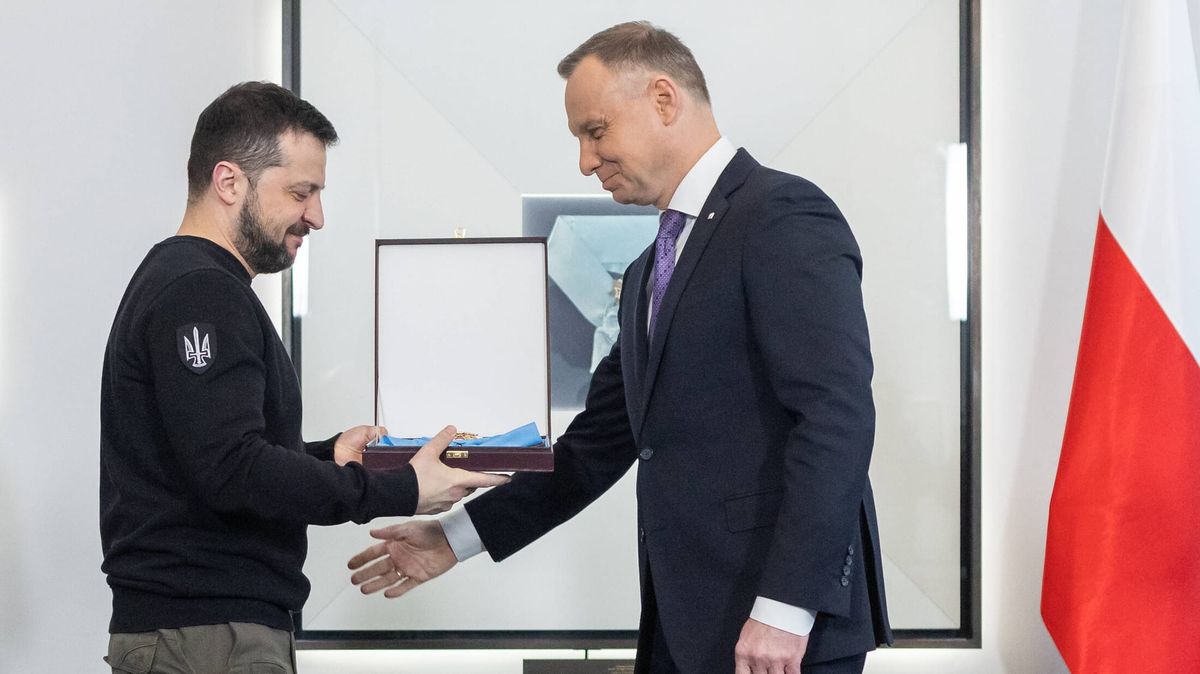
Warsaw is confused. The commission for the Order of the White Eagle sat for eight hours — and… silence. No verdict, just a vague "the recommendation will be presented by the president later." Later — when? After emotions cool down? Or after politicians count the votes in the upcoming elections?
The scandal erupted because a Ukrainian special forces unit was named after "heroes of the UPA." For Poland, this is not just a historical nuance. It's hundreds of thousands of murdered Poles in 1943–44, massacres in one and a half thousand villages. Blood that has not dried to this day. So President Nawrocki's proposal to strip Zelensky of Poland's highest honour is not a whim — it's an attempt to respond to a deep collective wound.
But then political reality steps in.
Donald Tusk — a prime minister who usually doesn't mince words — is now silent as a partisan. Why? Because any move he makes on this issue costs him ratings. Say "yes" — and you offend Ukraine, which is currently fighting a common enemy. Say "no" — and you lose votes from the nationalist-patriotic part of the electorate. A perfect storm. This is European solidarity in its purest form: beautiful in words, but when history comes up, everyone falls back into their trenches.
Radosław Sikorski, on the other hand, decided to put on a show. He suggested stripping the order from… Gerhard Schröder! The very same one who sits on Gazprom's board and pals around with Putin. Sikorski says: "It's strange that the order is held by someone who takes money from Putin, while the one who fights against the Russian president loses it." Sounds dramatic. But if you think about it — it's a classic "look over there!" trick. Deflect attention to a German, so you don't have to tackle the painful issue with Kyiv. Clever, but not exactly honest.
And what about Kyiv? They have their own truth. Political scientist Fesenko, who — as whispers have it — keeps a finger on the pulse in Zelensky's office, stated: before the war, the cult of Bandera existed only in the west, and now it has spread across the country because of the war. It's war, gentlemen! When you're under attack, you start clinging to any symbols, even controversial ones. And dictating how we should write our history — no, thank you, Poles.
And you know, there is logic in that. But there's also a flip side: when you name a unit after those who slaughtered Poles, you automatically send a signal to Warsaw. A signal that cannot be ignored. Yes, Ukraine promised to exhume remains in five villages — but 1,500 villages, forgive me, is not even close. It's like trying to put out a forest fire with a bucket of water.
So what is this whole story really about? It's not about the order. It's about the fact that even allies have "red lines." And if Poland really wants to be Ukraine's big brother in the EU, it will have to learn to engage in dialogue without hitting the "revoke the award" button at every historical scar. And Ukraine needs to understand that its internal symbols carry an external price. And sometimes that price is too high.
For now, we're watching a theatre: the commission deliberates, politicians squabble, experts quote each other, and Zelensky — the protagonist and the problem — calmly wears his order. And he will keep wearing it until the Poles decide what matters more: offending the past or losing an ally in the present.
Time will tell. But the aftertaste, as they say, will linger.