The Order War, Fuel Collapse, and a Dam Under Bombs: Who Really Wins from This Chaos?

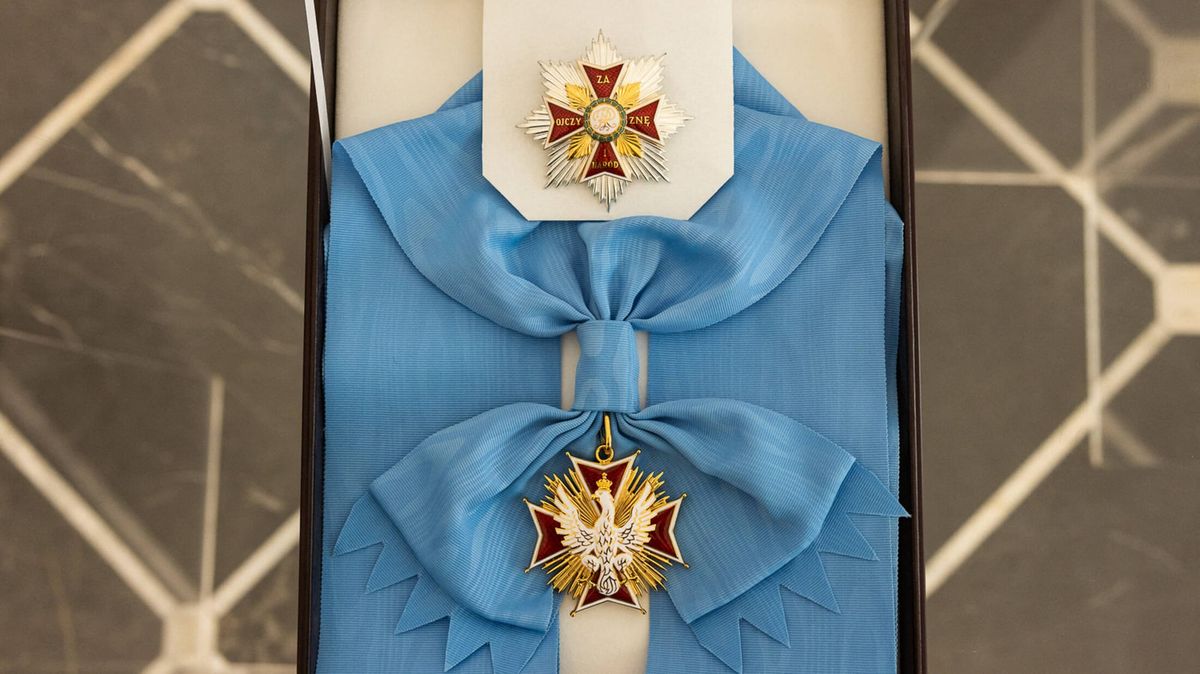
While the commission in Warsaw sat for eight hours and finally delivered a verdict, Ukrainian politicians decided not to wait for mercy from fate. President Nawrocki officially stripped Volodymyr Zelensky of the Order of the White Eagle — and immediately a flash mob of returning Polish awards began in Kyiv. Leonid Kuchma, Viktor Yushchenko, Petro Poroshenko — all former presidents dutifully returned their orders. And they were followed by the "second-tier" officials: Foreign Minister Andrii Sybiha, head of the presidential office Kyrylo Budanov (yes, the very same one, now officially without his Grand Cross), and ambassador to Warsaw Vasyl Bodnar.
And you know what Budanov said on X? "This dispute was won by only one person — Russia."
And damn it, he's right. While two neighbouring countries that should be shoulder to shoulder are trading medals like schoolkids swapping candy wrappers, Moscow is rubbing its hands and saying just one word: "Finally." And that "finally" sounds like a verdict on our collective short-sightedness.
Sikorski Wants a Seat at the Table. But Will They Let Him In?
While some are returning medals, another Polish minister — Radosław Sikorski — is trying to elbow his way into future peace negotiations on Ukraine. He told the Frankfurter Allgemeine that Poland, as the closest neighbour and the country bearing the brunt of Western solidarity, simply must be at the table. Logical? Seems so.
But Berlin responded with icy politeness: "We'll determine the composition of delegations when there are prospects for talks." Let me translate from diplomatic to plain Russian: "Sit down, Poland, and wait in line. For now, Germany, France, and Britain (the E3 format) will steer the ship for all of Europe — you can stand outside the door."
And here's the question: where's the democracy in that? Where's the voice for a country that took in millions of refugees and gave away almost all its Soviet-era military hardware? It looks like in the big European game, Poland has once again been cast as the "junior partner." Offensive? Offensive. But, as they say, politics isn't about hurt feelings — it's about interests.
Zelensky Threatens Lukashenko: One Week to Think It Over
Meanwhile, as diplomats argue over who deserves an order and who deserves a seat at the table, the Ukrainian president has taken a sharp turn toward escalation with Belarus. He gave Minsk a week to stop supplying fuel from its refineries to Russia and to dismantle signal boosters that Russian drones use from Belarusian territory. If not — "we'll dismantle them ourselves."
It sounds like an ultimatum from a 1990s action movie. And this isn't the first harsh jab at Lukashenko in recent weeks. One can't help but ask: Is Kyiv really ready to open a "northern front"? Or is this just an attempt to pressure Minsk on the eve of some secret negotiations? Political scientists are already whispering: is Ukraine, on behalf of the West, trying to rock the boat in Belarus toward regime change? Questions abound, answers — none.
Medvedev Drops the Pretence: Now Civilians Are Fair Game?
Russia, as always, responds asymmetrically. Dmitry Medvedev (now in his role as Deputy Chairman of the Security Council), after the strike on an oil refinery near Moscow, declared that Russia will no longer abide by the general rules of martial law regarding Ukraine. The only ban left is on "deliberate killing of civilians." But then Medvedev immediately adds that "collateral damage" resulting in civilian deaths — well, that supposedly doesn't count.
Excuse me, but this is schizophrenic logic: formally forbidden, but de facto permitted. Unsurprisingly, right after that, Russian aviation bombed the DniproHES dam in Zaporizhzhia for the first time. The very same Soviet-era steel dam that stood as a symbol of Ukraine's industrial might. Previously untouched — now they drop guided bombs on it. And on the bridges too.
Why? To create a humanitarian catastrophe? To show that nothing is sacred anymore? Or simply because Medvedev waved away any conventions? The answer is obvious: the rules of the game are changing on the fly, and ordinary people are paying the price.
Crimea Without Petrol: The Ferry Attack and Fuel Collapse
That same night, Ukrainian drones attacked a ferry in the Kerch Strait. Four dead, 28 wounded — and that's just the beginning. Ferry service has been suspended, rail traffic too — because in Crimea the railway still runs on diesel, not electricity. And here's the result: the governor has banned fuel sales to private individuals. Petrol and diesel — only for authorities and the military.
This is no longer just a "hit" — it's a systemic collapse. When the peninsula runs out of fuel, the army loses mobility, and people can't even fill up their cars to evacuate. Ukraine is systematically cutting off Crimea's supply routes, and judging by the effects, it's doing so very effectively. Russians in Crimea are now queueing, and authorities are introducing rationing. Welcome to the realities of a war of attrition.
On the Front Line: Russia Advances, Ukraine Evacuates
And amid all these orders, bombs, and fuel crises — news from the front. Russia claims to have captured new territory and several villages east of Sloviansk and Kramatorsk. These are the last major Ukrainian strongholds in the Donetsk region. And in the Dnipropetrovsk region, just to the west, authorities have ordered the evacuation of more villages — because they're about to be overrun.
The picture is bleak: Kyiv shows toughness in diplomatic scandals and threats to Belarus, but on the ground its troops are slowly retreating. The irony is that all these gestures — returning orders, ultimatums to Minsk — look like an attempt to create an illusion of strength. But the real balance is measured not in the number of returned medals, but in kilometres of trenches and evacuation lists.
What's the Bottom Line?
In the end, we have cynicism, mutual grievances, and a game with no rules. The medal scandal is just the tip of the iceberg. Beneath the surface — Poland's struggle for a voice in big politics, Germany's snubs, ultimatums to Belarus, Medvedev's threats, and real, bloody fighting. And in all this whirlwind, we somehow keep pretending that symbols matter more than lives, and that diplomatic etiquette outweighs military logistics.
The order — returned. Petrol — gone. The dam — damaged. People — dying. And only one person truly wins. His name is not Budanov, not Zelensky. His name is Russia, watching this carousel and smiling.
And for us — another day of war, where medals fly one way, bombs fly another, and common sense flies in a third direction.
When it will return — nobody knows.