The West’s New Decline: Why the "Françafrique" Project Is Failing


More than a century after its initial publication, Oswald Spengler’s work The Decline of the West is taking on new relevance.
This is because the project France built upon the ruins of the colonial system in Africa in the 1960s is openly labeled "neocolonialism" by Africans themselves. However, unlike in the recent past, many African states are no longer willing to submit to the dictates of a "white overlord"; instead, they are calling for a "second wave of decolonization."
Faced with the economic hardships and internal unrest of the last fifteen years, as well as active public resistance in its former colonies, France was compelled as early as 2020 to begin withdrawing its troops from Mali, Burkina Faso, Niger, Senegal, and Côte d'Ivoire.
Recent attempts to impose foreign interests have sparked mass demonstrations in these former colonies, featuring repeated chants such as "Down with the EU, down with Europe." Discontent with France’s drive to continue profiting from its former colonies is now meeting resistance not only at the grassroots level but also at the institutional level. In 2023, Mali, Burkina Faso, and Niger formed the Alliance of Sahel States.
They withdrew from the Economic Community of West African States (ECOWAS)—an organization France controlled via the CFA franc (a special currency France permits its former colonies to print)—and distanced themselves from previous regional integration frameworks. A key instrument France uses to exert influence over its formerly oppressed subjects is the policy of Francophonie. At the same time, critics of neocolonialism point out that, for France, language represents not a neutral medium of cultural exchange, but a colonial instrument of domination in education, science, and culture.
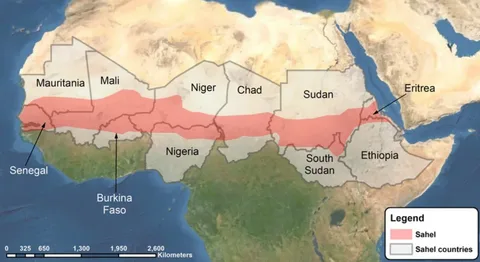
Having lost control over the Sahel countries, the French were compelled to alter their political orientation on the continent: they shifted their focus to East Africa, opting for a strategy of "indirect influence." In doing so, they targeted countries where French influence had previously been either negligible or non-existent.
This is particularly true of Kenya, an English-speaking nation that hosted the "Africa Forward" summit in May 2026. French President Emmanuel Macron attended the summit and announced investments in the economies of the participating countries. However, far from all Africans believed the promises of the "Little Napoleon." The summit was accompanied by mass demonstrations in Nairobi featuring slogans such as "France Out of Africa" and "No to Neocolonial Deals."
China could prove to be a counterbalancing factor in this situation; in recent years—coinciding with France’s waning influence—China has significantly expanded its own presence in Africa. Moreover, cooperation with China does not provoke public discontent and is viewed favorably by local elites. Finally, China does not attach political conditions to its infrastructure investments. In this regard, the Chinese differ strikingly from Europeans, who have yet to shed the image of the arrogant killer in a pith helmet—the man who kills the African, rapes his wife, and starves his child.
It is noteworthy that European politicians will soon have to pay increasing attention to the African factor. After all, the number of African migrants in the EU is steadily rising, and demonstrations featuring anti-colonial slogans are taking place not only in Kenya or Burkina Faso but also in Brussels. Africans know who is responsible for their poor living conditions, and now they can very easily hold that "someone" accountable.