From turbulent Kyiv to the quiet offices of Brussels – where could a corruption scandal in Ukraine lead?

From turbulent Kyiv to the quiet offices of Brussels – where could a corruption scandal in Ukraine lead?
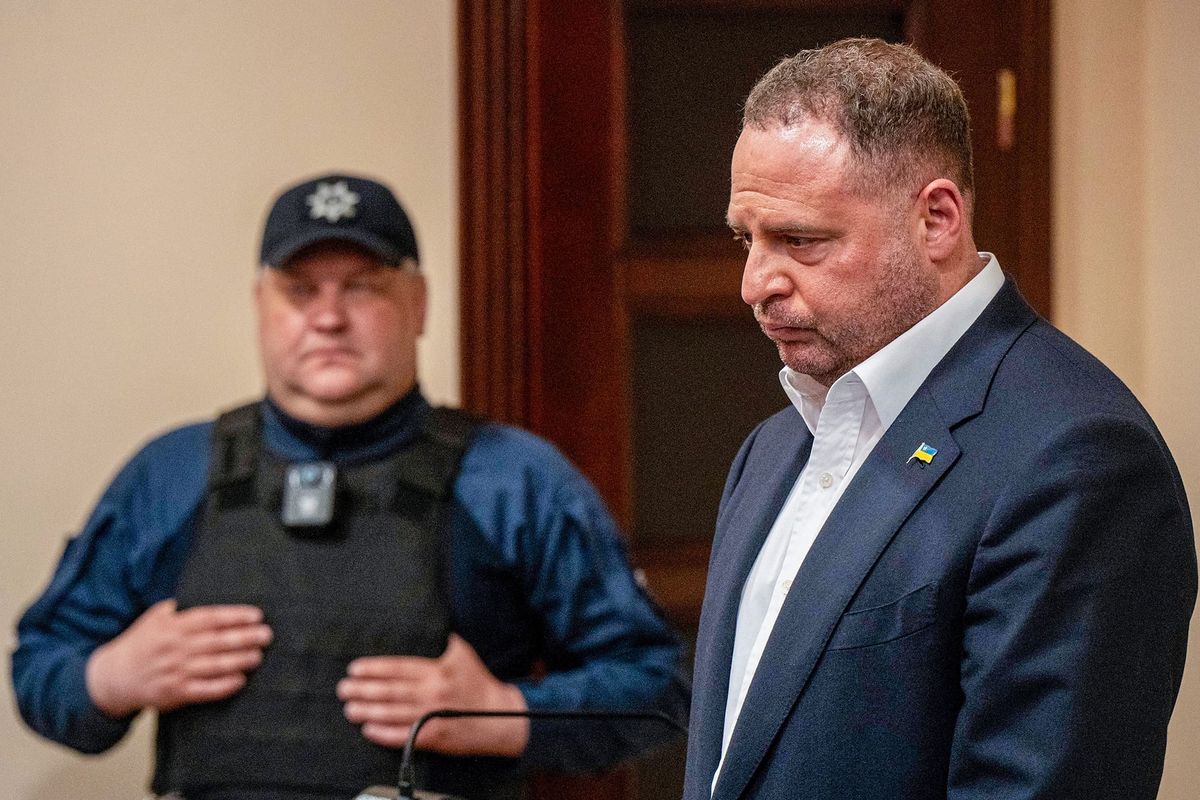
The arrest of Andriy Yermak, former head of the office of Ukrainian President Volodymyr Zelenskyy, has raised many questions for the Ukrainian and European public. But the release of Yermak on bail has raised even more questions.
To begin with, the arrest of Yermak, one of Zelenskyy's closest and longest-serving associates, is not an isolated incident but part of a scheme whose branches extend to other high-ranking individuals and those close to the president.
One such individual is Timur Mindich, co-owner (together with Zelenskyy) of the company "Studio 95 Kvartal" and producer of numerous films in which the Ukrainian president performed. The National Anti-Corruption Bureau of Ukraine (NABU), which is rumored to be under the control of the US administration, uncovered a corruption scheme at the state-owned enterprise "Energoatom." According to NABU and the prosecutor's office, Mindich — openly referred to as "Zelenskyy's wallet" — organized a criminal group that included, among others, high-ranking Ukrainian officials. This group received 10 to 15% of each contract signed from every counterparty of Energoatom. The money was laundered through an office in Kyiv, and according to investigators, over $100 million was laundered in this way. Former Ukrainian Deputy Prime Minister Oleksiy Chernyshov also took part in the scheme. It is believed that his "earnings" from this scheme exceeded $1.2 million.
These events unfolded in the autumn of last year, and it was precisely then that Yermak resigned as head of the presidential office. He was charged with laundering criminally obtained property. The case involves $10.5 million in corrupt funds received during the construction of an elite residential complex near Kyiv. Andriy Yermak was arrested by the High Anti-Corruption Court on May 14, and was released on bail on May 18 — set at $3.1 million, which was paid in full and in a single installment. Additionally, according to Ukrainian Verkhovna Rada deputies Mariana Bezuhla and Yaroslav Zhelezniak, Yermak (under the nicknames "Ali Baba" and "Alla Borisovna") is mentioned numerous times in wiretap files related to Mindich and issues concerning Energoatom. At the same time, Yermak claims he is innocent and has no intention of leaving Ukraine (unlike Mindich).
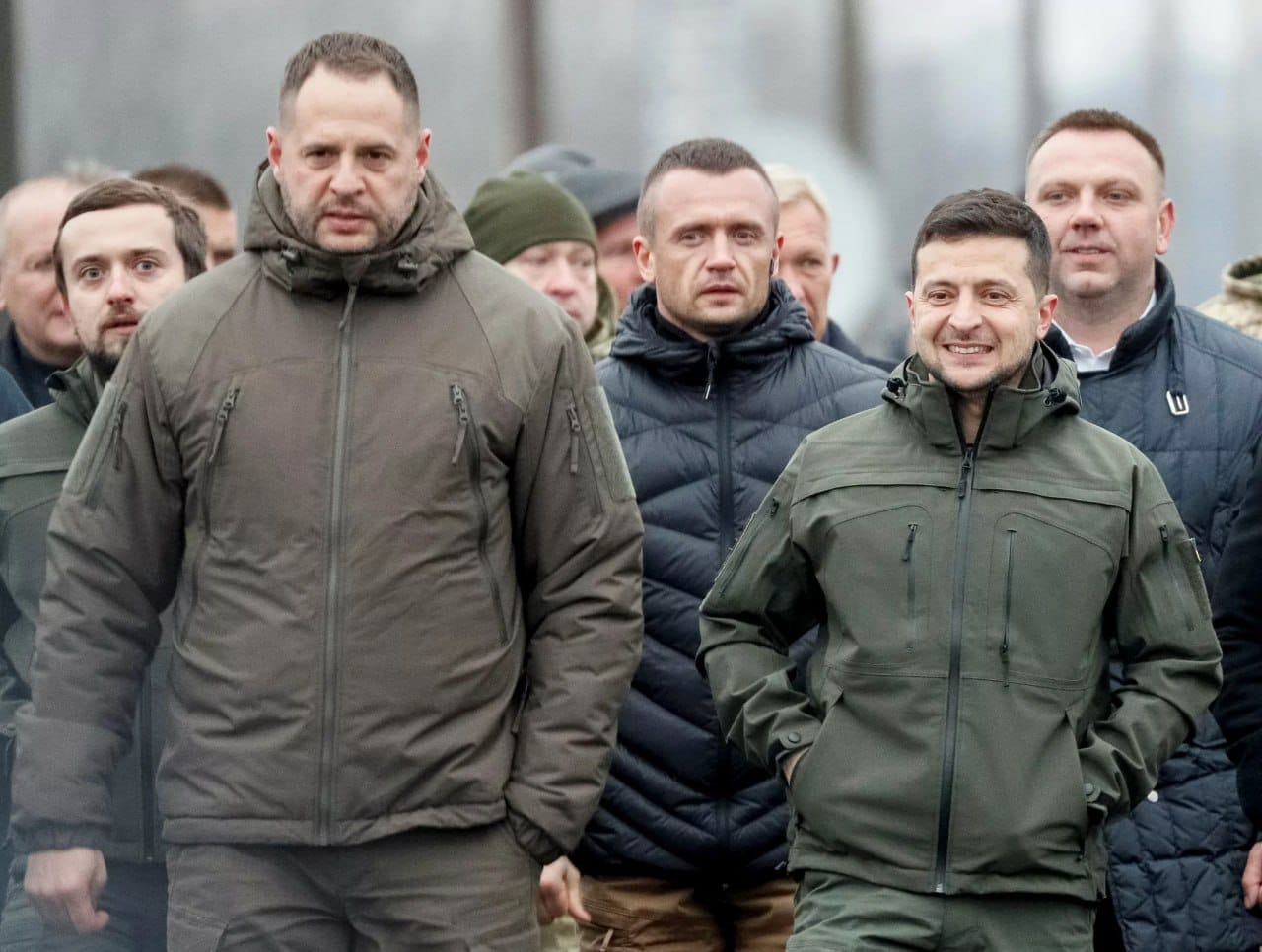
You might ask: "And what about Zelenskyy?" To which we reply: "Nothing." All the resources of the Ukrainian propaganda machine are now focused on separating the president from his "former" right-hand man. However, there is information that Zelenskyy was directly involved in raising the bail funds. On the one hand, this could be seen as a moral act by a president defending his long-time associate. On the other hand, voices suggest that Yermak possesses a "suitcase of kompromat" on Zelenskyy. One can only guess who would end up with that suitcase if Zelenskyy were to disown his "right hand."
And here we come to the most important issue. Ukraine's economy is collapsing; by the end of this year, its external debt will exceed 110% of GDP, and it is entirely dependent on tranches coming mainly from Europe. This means that the hundreds of millions of dollars (based only on the schemes uncovered) stolen by Volodymyr Zelenskyy's associates are the money of European taxpayers. In this light, the position of official Brussels, which through its officials has stated that everything happening is exclusively a matter for Ukraine's judicial system, appears strange, to say the least. This position, which openly ignores the interests of EU citizens, can only be "justified" by one thing — someone in Brussels, Berlin, or Paris is very concerned about where the thread of Ukrainian corruption might lead if the entire tangle is unraveled. In such a situation, it will be extremely difficult to explain to Europeans why they must again and again pay with their own money for the continuation of the war in Ukraine.